
“I see so many DJs who have blown up and sold out immediately who aren’t here any more,” says DJ, label head and now producer Yung Singh. “I want to be creatively consistent while also being authentic when it comes to my cultural standing.”
“I’ve done it all backwards,” he continues. “I’ve moved from DJ to sound engineer, then built up a sample library before taking the plunge into production.”
While he has held back on releasing music, Singh’s rise across global dancefloors has been meteoric over the last five years, powered by a love for bass music, UK funky and the Punjabi sounds of his heritage.
From his much-hyped viral Boiler Room sets and Punjabi Garage mixtape to his EKTA label and latest chapter as a producer on debut EP Bloom, Singh is a vital musical force. Past attempts have been made to produce music, but a combination of global touring commitments and a struggle to discover the right studio workflow have thwarted his creative ambitions.
“This producer journey has been born out of necessity and the frustration to get my ideas out,” says Singh. “But I’ve been banking tracks since last year after I had these important sessions with Rohaan, Wilfy D and Bianca Oblivion. Seeing how Rohaan used Ableton made me think I should give it a proper go again and I’ve not looked back since.
“These sessions also acted like a proof of concept for me and for the idea behind EKTA - that intersection of cultures and sounds does indeed work in a studio setting. We ended up making a bunch of tunes that we were all happy with and have gone down really well in my DJ sets.”
Punjabi sounds and electronic music were both inspirations that ricocheted through Singh’s family home while he was growing up. Older siblings and cousins exposed him to UK funky and dubstep, while his parents were both into ‘90s electronica.

“House, rave, jungle were all sounds I’d listen to, my parents used to work on the markets back in the day and had a guy who would go to the Netherlands and bring back dance tapes,” Singh explains. “There was always Punjabi music in the house as a kid, plus hip-hop, rap and R&B, then that first era of dubstep from UK garage – these were formative years for me.”
As soon as Singh arrived at university, he immersed himself in nightlife, taking in as many garage, bassline and UK funky nights and clubs as possible. “DJ EZ is a hero of mine, you can hear his influence in my sets, there’s an element of fond nostalgia for those songs from the late ‘00s,” he says. “There was Annie Mac’s show, Skream and Benga’s Radio 1 residency, these were both major influences too.”
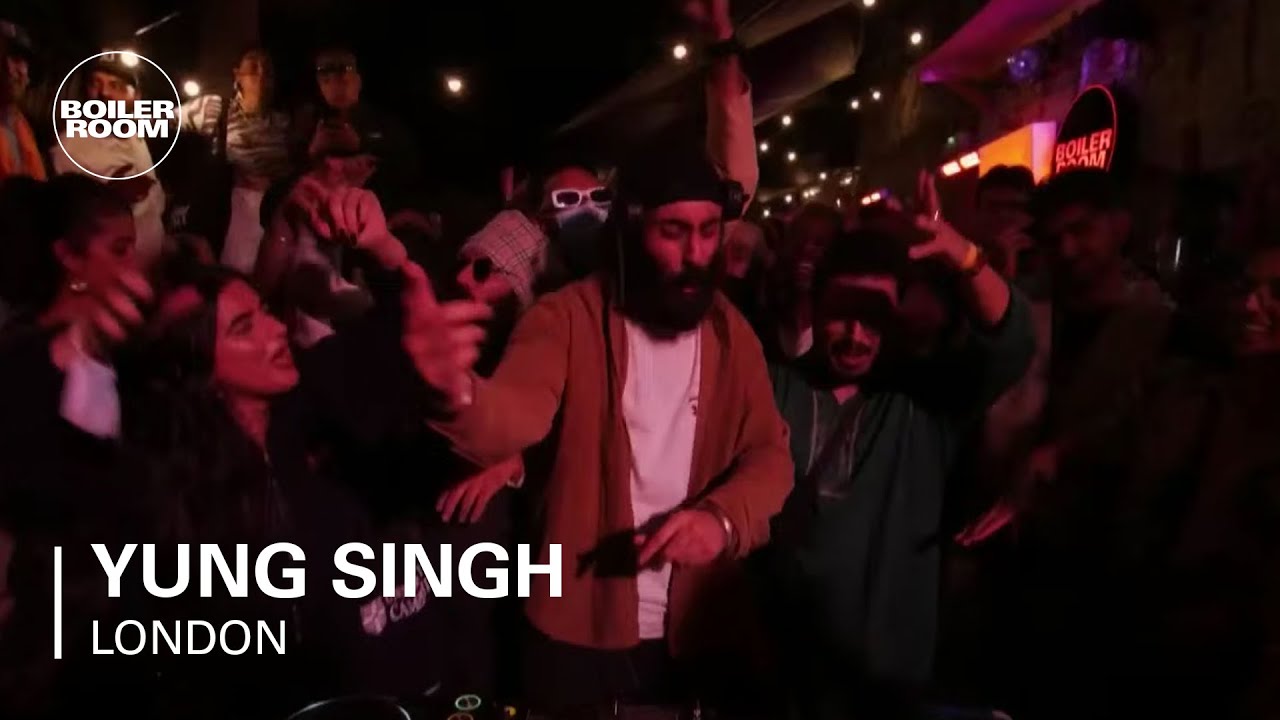
Singh’s debut Boiler Room set is still causing ripples within electronic music culture and opened a series of doors for him, its raucously energetic mix veering from Jersey club heat to Bhangra bangers. Curated by Singh and presented with Daytimers, Gracie T and SUCHI were among the DJs present at the event.
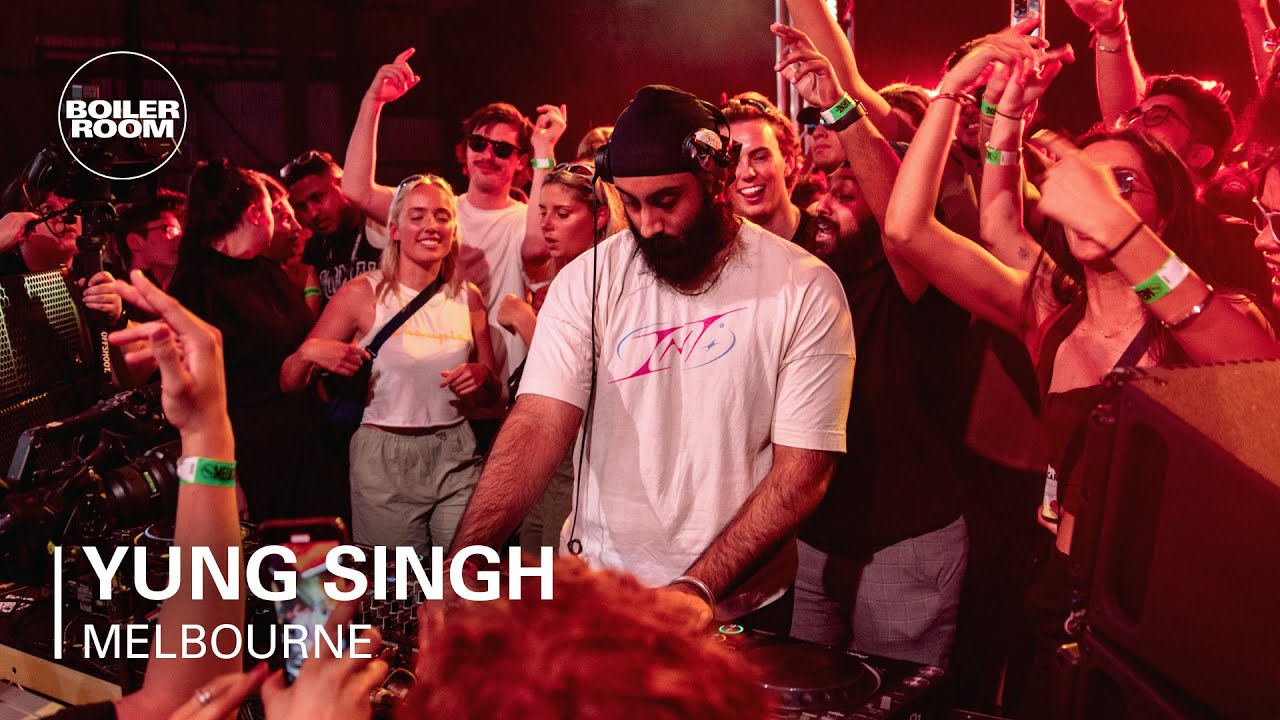
With an amped-up crowd and incendiary soundtrack, the energy feels like it’s almost pouring out of the screen. A second Boiler Room appearance in Australia cemented Singh’s position at the epicentre of this cross-cultural musical explosion, leading DJ Mag to name him as their Breakthrough DJ of the Year.
“A viral hit is a viral hit and I ended up with a lot of opportunities coming my way,” Singh says. “But I’ve turned down more things than I’ve said yes to during the last three or four years. People don’t get it but I want to be here in five or ten years, still making music and DJing rather than just being this flash in the pan.”
Since he first jolted electronic music culture, music from the South Asian diaspora has grown in profile, thanks in part to his sets, alongside the work of the Daytimers Collective and other influential artists such as Ahadadream.
In 2024, Glastonbury hosted its own Arrivals area dedicated to South Asian sounds, which grew into the Azaadi stage the following year. Amid this interest and energy, expectations have been weighted on Singh’s productions, but he has navigated this pressure by stepping back and taking the time to perfect his work before releasing anything.
“There are people who are keen for you to put out music as it’s easier to sell you as an artist, but I only wanted to start releasing when the time felt right”
“There are people who are keen for you to put out music as it’s easier to sell you as an artist, but I only wanted to start releasing when the time felt right,” Singh states. “I was busy working on developing EKTA as a concept and party series, and all the creative direction has come from me - the website, its visual identity and the resources hub, so I can give back to those who have inspired me from a Punjabi and underground music perspective too.”
After Singh ran his first EKTA series, organised a Fabric takeover, then played at Coachella he found himself heading towards burnout. While he refocused on DJing, he was also drawn back to the studio.
“I do straddle a few different worlds so my music is a conduit for some, there’s this educational element to it. I was so busy DJing and organising parties but there’s always been this creative sense that pushed me to go beyond playing parties - that’s what got me into production again.”
"Every time I play these tracks, they pop off"
As a means of strengthening his craft in production, Singh set up a number of studio sessions with likeminded producers and artists that were influential in his creative development. He cites Rohaan, Bianca Oblivion, Wilfie D and Lamsi as important collaborators who have helped him on his way.
“Lamsi is a great DJ and producer and we’ve worked on three or four tracks,” says Singh. “He’s of Dutch and Surinamese heritage, I brought my Punjabi and British cultures, we forged these four cultures together.”
“I was explaining to Lamsi how a lot of the music and genres within Punjabi folk music are built around war ballads, what people would listen to before fighting so they have this very primal feel. I wanted to channel that energy into our collaboration and every time I play these tracks, they pop off.”
He also recalls a few sessions with other artists who are classically trained or have had some formal musical teaching, such as Amanda Sze and Pour La Vie, as being turning points in his production journey.
“I’m no good at writing melodies from scratch, to be honest,” Singh says. “My strengths lie in building drums and finding samples so it’s an ideal workflow to be able to bounce ideas off someone who can actually play those ideas. It gives everything a more human feel because of that swing, but also takes pressure away from me.”

Singh’s Bloom EP features tracks from the vast archive of music the DJ-turned-producer is currently sitting on, most of which was made in-the-box using a laptop, Ableton and Airpods. While he is at pains to point out how these tools are easily accessible, he says it’s his sample library that helps his music stay eclectic.
“I specifically avoid Splice as that's what everyone else has access to, I prefer to dig across the internet, collaborate with other artists who either send me samples or we make fresh ones and I make my own too,” he says “Sometimes this is with real instruments or with software instruments like Kontakt patches, sometimes I’ve ripped samples from old sample CDs, especially when looking for Punjabi sounds.”
Tabla Trouble is one of the EP’s more hypnotic and propulsive tracks, with vocal samples taken from Bloom KSHMR, a virtual instrument that blends Indian sounds with contemporary production, developed by Excite Audio in partnership with producer KSHMR.

“For Tabla Trouble, I wanted this harsh contrast between the reverby low end and the really in your face high end of the tabla,” Singh explains. “For the high end I increased the attack and brought it forward in the mix through compression and saturation, using 1176 and Magma BB Tubes [emulations in parallel. For the low end hits, there are loads of reverb and delay using Valhalla and Ableton stock plugins.”
Jaycen Joshua's God Particle is another plugin that Singh has relied on to craft certain elements of his sound as part of his mixing and mastering chain. “It’s all fairly basic from EQ to compression and saturation, then I adapt for each track,” he says. “But there’s nothing too weird in my setup, I’m still learning as I go along.”
Situationz also features on the EP and was made on Christmas Day, inspired by how Skream had come up with his iconic Midnight Request Line during the festive season. It features a rhythmic Dhol pattern used by the legendary Sukshinder Shinda for some of his most iconic song intros.
“I remember thinking how I needed another track for the club,” says Singh. “I had this Punjabi folk drum pattern that has this primal vibe similar to UK funky and wanted to get this into a song. The original vocal sample was almost like yodelling, it sounds like a baile funk sample with all the processing.”
“In everything I do, I’m taking inspiration from Punjabi influences – but I never want to be boxed in by it”
Plugin presets also play a role in Singh’s process, particularly when he has a clear idea of what he wants something to sound like but is unsure of how to realize that vision sonically. At these points, he’ll flick through presets until one sounds right, before using that as a starting point to shape a sound.
“It makes life a lot easier and means I can save those settings and now have my own presets,” Singh explains. “The same goes for stock plugins, I use the Ableton stock plugins too. Y U Q T showed me [Ableton’s Auto Pan preset] Around the Head and I used it on Tabla Trouble with the intro to make it feel more expansive. It’s a cool way to manipulate stereo space, although having said that, I’m still very much learning on the job.”
There’s more to Singh’s creative side than his music. His EKTA platform has been set up to merge diverse folk traditions with dance music futurism while his website has a resources hub celebrating the story of Punjabi, Sikh and South Asian culture.
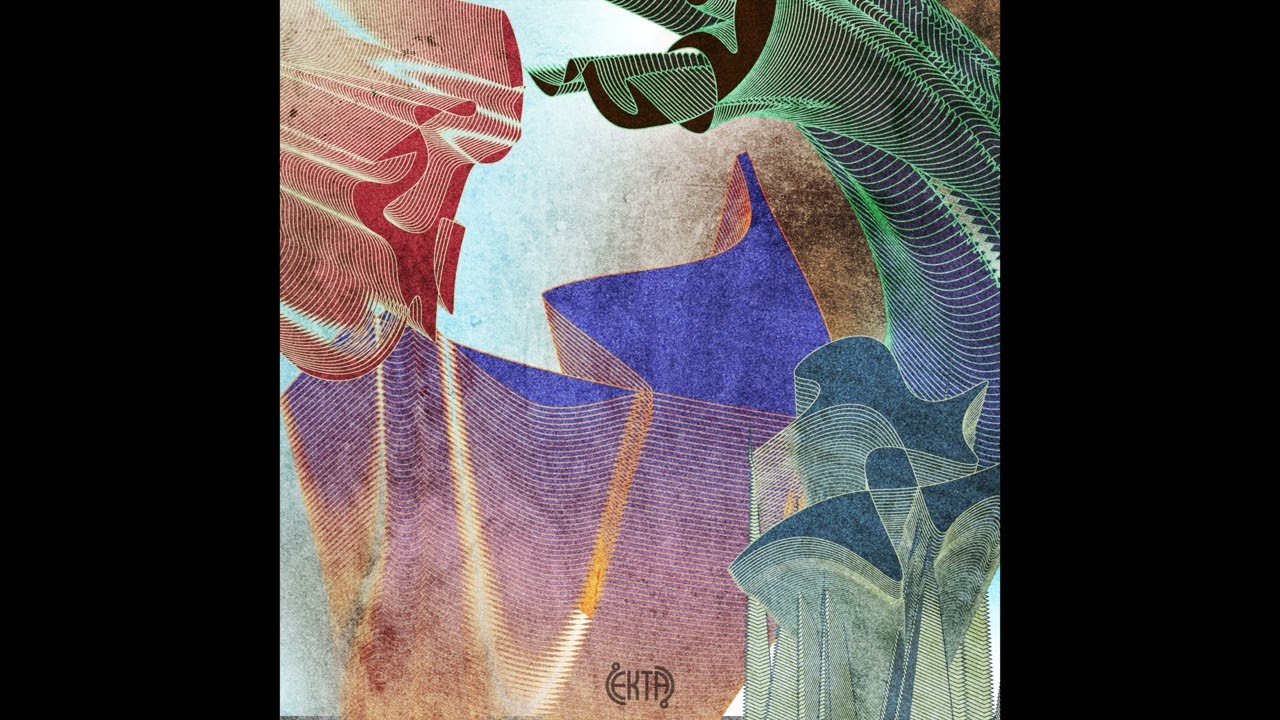
The artwork for Bloom stems from the visual identity of EKTA and how it’s inspired by a library of visual cues, ranging from the Indus Valley Civilisation to the Phulkari ("flower work") textiles, textiles of Singh’s own family, specifically pieces crafted by his mother and grandmother.
This Phulkari provides the literal and symbolic DNA for the EP, bridging these heritage patterns with its title. “Everything I do, I’m taking inspiration from Punjabi influences but I never want to be boxed in by it,” Singh says.
“That’s something I’ve had to deal with since my first foray into the global underground scene, journalists can be lazy. I played a varied DJ set and they just want to talk about one Punjabi song, that’s only a small portion of my set. I don’t shy away from it either, it’s walking a tightrope which forces me to be more creative. I'm inspired by the culture and want to input into it, rather than just taking from it.”
NUG46 opens the EP and first formed during an idyllic road trip to Whangārei Heads, New Zealand, the title taken from the registration plate of the vehicle. Weaving field recordings from the remote beach together with a hypnotic tabla line, Singh captures the ethereal side of Indian classical music while maintaining a club-focused momentum.
“NUG46 was one of the first proper tunes I wrote from start to finish,” he says. “It was inspired by a road trip listening to LTJ Bukem, floating away on these crystal blue waters. I almost treated the tabla like a vocal. I wanted it to be buttery smooth and welcoming, so I used an LA-2A and adjusted the EQ and envelope to remove resonance and harshness.”
As Singh drops his debut EP, he's already sketching out plans to lift the lid on more music that's ready for release, including further solo outings and a variety of collaborations. Opening the door to the next chapter of his creative journey, Bloom is just the beginning.
“We’ve got enough music stacked for the next 18 months,” Singh says. “It’s just figuring out how to place everything and ensuring it all has enough breathing room. But I don’t want to sit on music too much, it can start to stagnate, so we’ll need to get these tracks out there. It’s pretty exciting times.”
