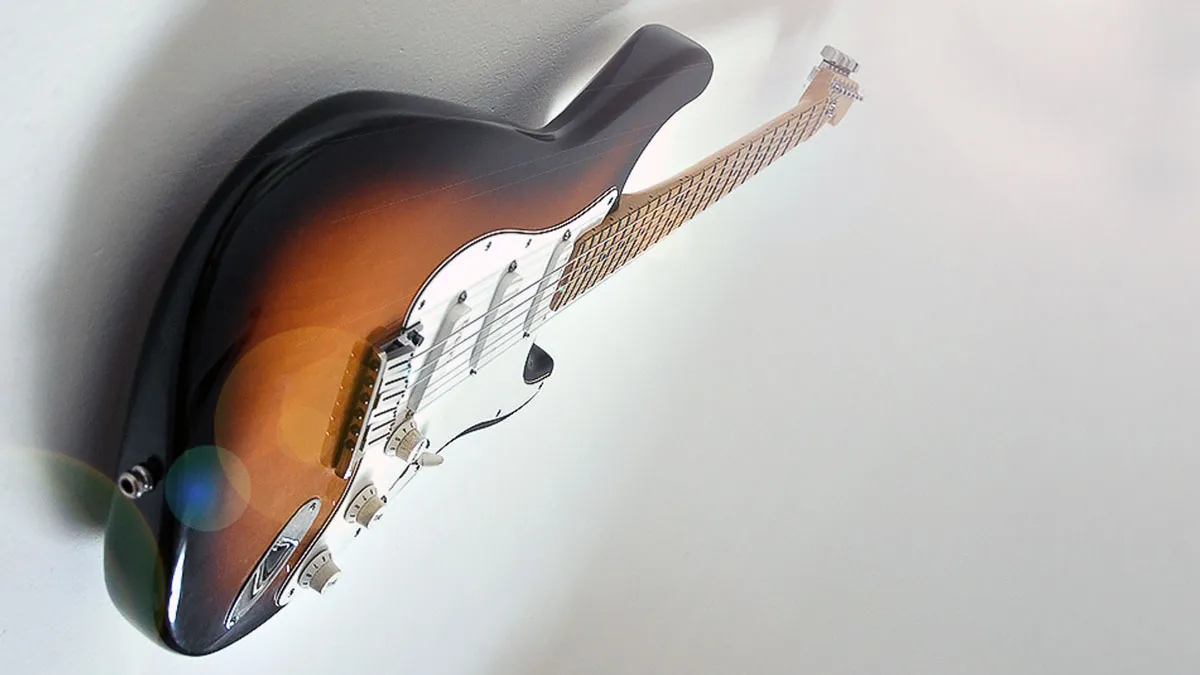
Wall hangers are a handy way of showcasing your proud guitar collection, but now one canny inventor has devised a way of hiding guitar hangers entirely - meet the Hoverguitar, which creator Roman Winkler is dubbing the world’s first invisible guitar and bass wall mount.
The mount is visible only from very limited angles - to most observers, guitars look like they’re floating.
Hoverguitar’s secret lies in its ‘Super Toaster’, which is mounted beneath bolt-on guitar neckplates and hooks onto ‘The Super Slug’, a wall-mounted hook.
Attaching the Super Toaster takes around three seconds, apparently, and allows the guitar to be mounted in several orientations, from vertical to horizontal and degrees in between.
Hoverguitar’s system promises no tension in the neck or tuning stability as per traditional wall hangers, while the Super Toaster also allows guitarists to store picks beneath their guitar’s neckplate.

Of course, the system does have its drawbacks, namely that it’s currently only available for guitars and basses with Fender-style rectangular bolt-on neckplates. Nonetheless, Hoverguitar promises the guitar mod takes five minutes at most and is completely reversible.
The Hoverguitar is available now for €36 from Kickstarter.
