


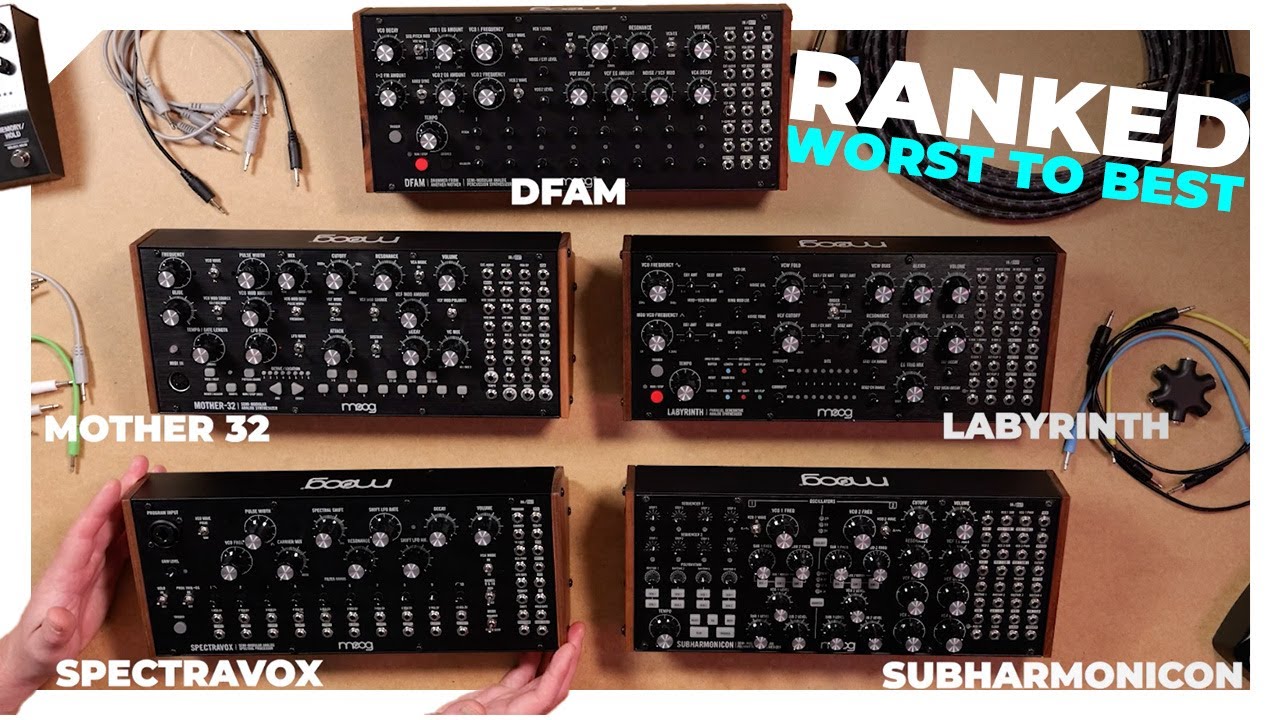
Moog's 'Mother' synths – the unofficial term we're using for the company's five recent compact, Eurorack-compatible instruments – have all got a tasty $100 discount via Sweetwater this Cyber Weekend.
The Labyrinth, DFAM, Spectravox, Mother-32 and Subharmonicon are down to $499 a piece, which is one of the best prices we've seen, particularly for the newer machines. DFAM, Mother-32 and Subharmonic also come with a free Moog Patch & Tweak book, which is a nice little sweetener too.
You might be sold on that offer already, in which case, feel free to run off and order whichever appeals to you the most. If you're on the fence about the pros and cons of each machine, you'll find our (entirely subjective) ranking of Moog's Mother range below...
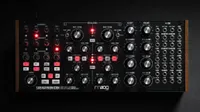
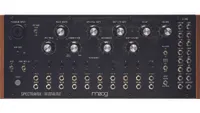
Intro: Motherlode
Moog has a deep history with modular synthesis. Bob Moog’s original pioneering synth design was a modular instrument, the patchable elements of which laid the blueprint for over 60 years of hardware synth design.
Despite a history of pioneering modular instruments, Moog was slightly slow to capitalise on the Eurorack boom that happened in the early 2010s. It took until the release of the Mother-32 in 2015 for Moog to properly wade into the modern modular waters.
That first entry into the ‘Mother’ range was a fairly straightforward instrument, a single oscillator monosynth equipped with a 32-step sequencer, 32-point patchbay and classic Moog ladder filter. But it brought the core of the classic Moog modular design to the masses.
In the decade since its release, the Mother-32 has been joined by four siblings, creating a range of Eurorack-compatible, analogue modular instruments designed to compliment one another and provide a jumping off point for modular experimentation. As this ‘Mother’ range approaches its 10th birthday, we’ve put the range head-to-head to rank them from worst to best.
Let’s start with a major caveat here – we are not ranking every one of Moog’s semi modular synths here. Even in the current line-up, the company has the likes of the keyboard-equipped Matriarch and Grandmother, plus the DIY Werkstatt and Mavis. While these are all impressive instruments, we’re excluding them here in favour of focussing on a side-by-side comparison of the five instruments that share a form-factor, design approach and similar price point.
In the video above, you can watch MusicRadar’s Reviews Editor Simon Arblaster and Managing Editor Si Truss argue about our choices.
Of course, while all synths in the range can be used standalone, these patchable instruments are designed to be in combination with each other and other modular gear. In that spirit, in our video we challenge ourselves to convince one another of the best two-synth pairing, and each put a patch together to make our case.
Honestly, we’re fans of the range as a whole, but which is the least essential and which is the cream of the crop? Let’s count them down…
5. Subhamonicon

There’s a lot we really love about Subharmonicon. Its unique sequencer design puts an emphasis on polyrhythms and subharmonic frequencies. Two sequencer lanes can be driven in a mix-and-match fashion by four rhythm generators, the combination of which can create patterns that evolve and move in hard-to-predict ways.
These sequencers can be routed to the synth’s two oscillators, each of which comes accompanied by two sub oscillators, which can be tuned to pitches quantised to either equal temperament or just intonation tuning systems. The result creates evolving chords with up to six tones, encouraging harmonic and rhythmic experimentation.
For all its experimental tendencies though, the actual sound of Subharmonicon can be a little vanilla for our tastes. The oscillators have square and saw modes, and there’s an A/D envelope and resonant ladder filter on offer to shape the sound, but compared to some of the other machines in this line-up, there’s not masses of sound design potential without patching in some external gear.
For our money, Subharmonicon comes alive when drenched in reverb and delay. Great for evolving ambience, but a little one-dimensional when it comes to sound design.
4. Spectravox

Spectravox is the least self-contained of Moog’s semi-modular range. Billed as an analogue vocoder and filter bank, while Spectravox does pack a single oscillator that allows it to be played as a simple synth, it really comes to life when fed an external input.
We’d argue that Spectravox is best when not being treated like a traditional vocoder. The Program input can be fed a variety of sources as well as the human voice, and can do some fascinating things when fed distorted drum beats or resonant acid-like synths.
This is a theme for Spectravox as a whole – the more hardware you have to pair with it, the better it becomes. Of all Moog’s semi-modulars, this is the one that makes the least sense as a standalone purchase.
The ability to use each filter band as a CV envelope follower, routed to modulate other hardware, is a highlight and has the potential to keep you entertained long after the novelty of the ‘robot voice’ vocoder sound wears off.
3. Labyrinth

The newest addition to Moog’s semi-modular lineup is one of the most experimental synthesizers we’ve seen in recent years.
Moog describes Labyrinth as a ‘parallel generative analogue synth’. In practice, the first two of these words refer to two distinctive elements of Labyrinth’s design – its unique dual-path synth engine, and its sequencer, which uses randomisation tools in order to create some unpredictable, polymetric patterns.
We love its West Coast sound and experimental design. While some of Moog’s semi-modular instruments are only likely to appeal in specific contexts or paired with other bits of modular gear, as with Spectravox or Subharmonicon, there’s a lot to recommend Labyrinth, whether it's used as a self-contained desktop synth, as a part of a wider Moog rig or installed as a synth voice-come-sequencer in a Eurorack system.
On the downside, we find the interface here fiddly – a running theme with these compact synths, but it’s particularly evident here with the cramped UI and annoying sequencer buttons. The slightly out-there design of the signal path won’t suit everybody either. For those happy to look past these factors though, there’s a lot of inspiration to be found here.
2. Mother-32

Mother-32 was Moog’s first foray into this Eurorack-friendly, semi-modular format. In many ways, Moher-32 is the most traditional instrument in the range, based around a fairly straightforward semi-modular design.
With just a single oscillator and fairly basic modulation sources, Moog’s Mother-32 might look a little under-powered compared to some of its semi-modular rivals – both from Moog and elsewhere – but its handy patch bay and excellent sounding components give it more punch than you might expect.
If nothing else, Mother-32 offers the easiest way to get that classic ‘Moog sound’ – and the audio input lets your route signals through its gorgeous-sounding ladder filter. Its sequencer and MIDI input are handy too, both for use with its internal sound engine and for acting as a base when paired with other semi-modulars.
Potentially, this is a great gateway into the world of modular synthesis for those looking to dip their toes in the water for the first time. So be warned - buying one may lead you to purchasing another two, and then shelling out on a full Eurorack rig.
1. DFAM

An initialisation of Drummer From Another Mother, DFAM sits in the space somewhere between drum machine and synthesiser. On the one hand, its monophonic signal path with dual oscillators and resonant ladder filter is classic Moog synth fodder. However, the snappy envelopes – with control over just the decay length – combined with its routable noise generator and basic eight-step sequencer, means the instrument is particularly well-suited to punchy, percussive sounds.
Core to DFAM’s character is the way its oscillators interact. The two VCOs have a particularly wide range, and can be synced as well as used for audio rate modulation. Each oscillator also has its own punchy pitch envelope, all of which makes the synth capable of excellent metallic perc tones, tuned drums and sweeping kicks that can really cut through a mix.
It’s not perfect. The sequencer can be annoyingly fiddly, and the lack of MIDI sync makes incorporating it into a wider setup a pain – although it’s arguable that both of these aspects contribute to its unique character.
When we’re out in the real world visiting artists in the studio, DFAM appears to be one of those synths almost every producer seems to own – particularly among the techno fraternity. A must-have and a modern classic.
