


It should come as no surprise that a conversation with jazz guitar hero George Benson often feels every bit as poetic as the music made by the man himself.
“You know, I really like Walking To New Orleans because it’s so simple,” he says of the title track on his new covers album, out now via Mascot Label Group/Provogue.
“Only Fats Domino could have come up with an idea like that. You can almost see yourself walking for a distance, not that long a distance, but it definitely makes you think of a lonely person walking down the road of life. Which is full of all kinds of things, some of it tragic and some of it pleasant. It’s all about the visuals along the way. That’s what that song makes me think about.
“Whenever I used to head out on the road, I would always take time during the day to walk around the area,” he adds, with a warm chuckle.
“Sometimes I’d walk down a railroad track and walk as far as I could before I got tired, hoping a train didn’t come along and run over me, haha! It allowed me to see a lot of the areas I was involved in and that’s what it reminds me of.”
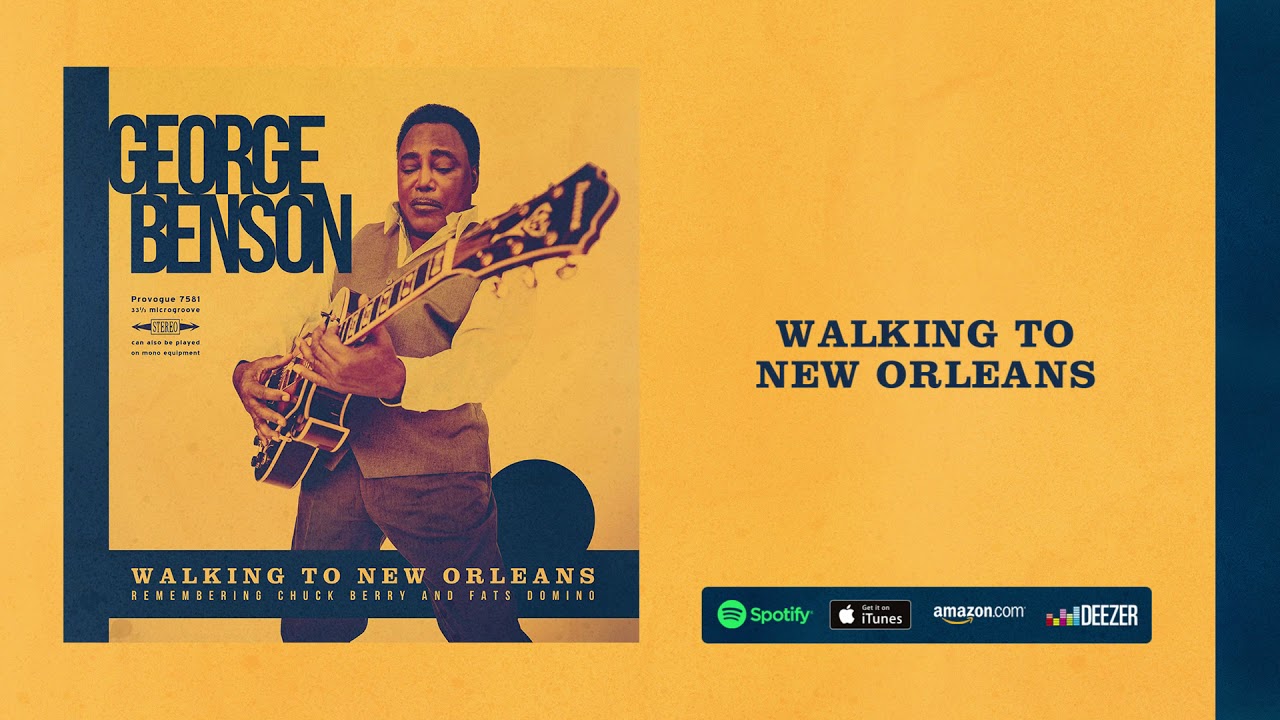
He describes his latest album, in remembrance of Chuck Berry and Fats Domino, as a project he initially dismissed “nobody respects them more than me”. Just like every musician has their heroes, the two early rock ’n’ roll pioneers would prove instrumental to a young, impressionable George Benson’s mind.
“They were a part of my growing up, my whole life experiences through the '50s and early-'60s. It was very informing, very enlightening and very pleasurable. Chuck probably had a small amplifier that could not project loudly, so he had to turn it up to distortion level in order to be heard - which is how he invented that fuzz tone and made it popular.
“But cats who had money to afford a big amplifier didn’t have the same advantage, so someone had to invent the fuzz tone box to create that sound, haha! I think Chuck is very important in causing all of it to happen.”
Years ago, they tried to get me to use pedals. I tried for a minute and then thought it just took too much attention off the guitar
The brown sunburst Ibanez GB10 held in his hands on the album cover is precisely what can be heard throughout the album, fed direct into a Fender Twin - an amp which George praises for its ultra-clean and lightning-quick response.
“Though I also used the really old, classic D’Angelico that I made a lot of hit records with,” he notes.
“It only comes out of the closet every now and then because I’ve been an avid Ibanez player for many years and we have a great relationship. They make such beautiful guitars - I enjoy playing them because they make life easy for me! I did use Polytone for a while, but I have to say Fender have made me some great amps over the years. There’s a Bassman and a Deluxe model I use for smaller venues, but the Twin you hear on this album is my favourite amplifier of them all.”
There was a time long ago in Benson’s career where he very briefly considered adding to the basic building blocks of his sound. It didn’t take much longer than 60 seconds for him to realise he simply had no cause for anything else but an amp, a cable and the guitar in his hands.
“Years ago, they tried to get me to use a lot of those things - pedals, as you call them,” he laughs.
“I tried for a minute and then thought it just took too much attention off the guitar. I can’t concentrate on improvisation while worrying about what’s going on with my feet. I gave up with that very quickly!”
Here, the jazz legend talks us through the 11 guitarists that blew his mind…
George Benson plays London's Eventim Apollo on 18 and 19 July.

1. Charlie Christian
“I’d have to say Charlie was the one who got me started thinking about guitar. The reason why was his ability to swing and his choice of notes while improvising - they never went where I thought they should go.
With my own playing, I find when the guitar guides me it sounds more interesting, but if I want to swing hard I let my voice take charge because it phrases better
“They went someplace else and it all worked! I don’t know where he got his thinking from, but I do know that he used to be a saxophonist. So that might explain where he was coming from with that style of playing, and it was highly influential…
“With my own playing, I find when the guitar guides me it sounds more interesting, but if I want to swing hard I let my voice take charge because it phrases better. I try not to let one outweigh the other. If the guitar takes over, you can imagine things the voice can’t do in terms of range and intervals.
“It’s harder to get the voice to move through intervals accurately; you can do them but not as accurately as a fretted instrument like the electric guitar. Sometimes I have to make a choice over which one is going to guide me.”

2. Wes Montgomery
“I’ve always liked Montgomery’s playing because he thought more like a piano player than a guitar player.
“He’d use chords that you’d associate with pianos, like minor 6ths and dominant 7ths, but the inside versions rather than the common ones we use every day. He would go inside and play it simple or sophisticated, but always in a way you would not be used to hearing. That’s what made his music so interesting.
We’d talk for hours about things he wouldn’t normally say to other guitar players
“I got to know him well; we were very good friends. Whenever we were in the same vicinity, we’d have breakfast together. In New York, the clubs don’t close until four o’clock in the morning. What we’d eat would be more like a dinner - we’d have chicken and waffles, haha! Then we’d go home and try get some sleep. I wouldn’t get up until noon the next day after six hours' rest. We’d talk for hours about things he wouldn’t normally say to other guitar players. I was very young, maybe 22 or so.
“The last time I saw him was when he was 68 just before he passed away, so I was only 24 or 25 then. He told me what he wanted most in life was a pair of alligator shoes and a Cadillac Roadhog, because he hated aeroplanes. It was called the Roadhog because it took up so much of the highway, but it was a nice riding car. You’d feel comfortable riding for hundreds of miles, from one gig to another. That was his dream!”

3. Django Reinhardt
“There are many reasons why I look up to Django Reinhardt. He didn’t let his handicap, down to two fingers on the left hand, deter his mastery of the instrument. He was harmonically interesting and had unbelievable technique. That guy really swung hard!
You can’t leave the public too far behind in your improvisation, which is easy to do when you play a lot of notes like I do!
“There’s something I learned about those outside flavours many years ago. It was an idea that came from John Coltrane, not that anyone can play like him - that’s impossible - but it was this thing called chord stacking. Instead of playing one chord, he’s got the choice of three or four. Any one of them will do when you transition from one place to another harmonically. You don’t have to play what we call a two-five progression.
“Where you can use an A-minor or D7, which are very common, there a few other chords available in addition to that which can spice up your tonalities and harmonies. That’s what I do.
“More recently, I’ve found triads work very nicely. They make a complete statement - it sounds like ‘dah dee dah’ or ‘dee dah dah’ - people can hear that. The public doesn’t have to work hard to understand where you are going with it. You can’t leave the public too far behind in your improvisation, which is easy to do when you play a lot of notes like I do! Django knew how to keep people interested.”

4. Andrés Segovia
“Andrés has to be here because of what he did for the guitar. He turned the whole world onto the guitar’s flexibility. It didn’t have to be relegated to one particular style.
“Within his classical approach, you could do a lot of things similar to what the piano was doing - a lot of counterpoints, without giving up one thing to serve the other. Even by itself, the playing was interesting. He didn’t need to be part of a group or band playing. I have to give him a lot of credit for inspiring that train of thought.”

5. Paco De Lucía
“He’s a true master. For me, he took flamenco music - which was out of the ordinary and related to one part of the world - and brought it to the rest of the world.
“He sat in SAM and played with some of the other great guitar players on the planet. He blended in beautifully and sometimes outshone them all… showing everyone how to play. I really enjoy his playing.
I got to know Paco; I have a picture with him and John McLaughlin that I’m very proud of… it’s one of my favourite pictures
“I got to know Paco; I have a picture with him and John McLaughlin that I’m very proud of… it’s one of my favourite pictures. John is a fantastic musician, too. We met in the early-'70s I think, when Tony Williams brought him to the United States.
“Here’s a story: someone said he needed an amp to rehearse with, so I loaned him mine - this gigantic Fender head, two 15-inch speakers that were at least four-feet tall. When I came to work later, everything on the amp was turned up to 10. I had to say, ‘Man, who is this guy you have playing with you?’ That was John McLaughlin’s first visit to the States.
“Eventually, we ended up doing some gigs together in Spain. Paco and John together, then a jam session with all of us. It’s on video… you can watch it on YouTube.”

6. Tomatito
“Tomatito [aka José Fernández Torres] is another traditional flamenco guitarist, but in the highest tradition.
“He has it all: great tone, great ideas and was always searching for new things to bring to the music. I’ve always liked that kind of approach to improvisation, and he’s one of the best.”

7. Dave Creamer
“He is another great creator of new ideas and has this totally new approach to guitar. It will probably catch on in the next 20 years, because that’s how far behind him we are, haha!
“I met him over 30 years ago, and went to his house because someone told me he was great - and they weren’t lying. I learned more in two days of hanging out with him than anyone…
“he gave me one book. The first two pages took me six months to figure, but I did eventually learn something. I picked up some music by him recently. I got him a gig playing with Miles Davis - he played with him for a very short time. He told me that was the only band in the world he was interested in jamming with, so I called Miles…”

8. Earl Klugh
“This is another guy who changed the whole concept of guitar, especially in the United States.
“When everyone thought bossanova was dead, because the acoustic guitar rage went away in the early-'60s, here comes Earl - who had studied with a man who studied with Andrés Segovia. His teacher was trying to teach him to play classical guitar but he wanted to play something else… he just didn’t know how to accomplish it.
Earl has great technique with the pick, but when I heard him play I said, ‘No, that’s not you playing.’ I told him that when he played with his fingers, I believed every note
“His manager made me listen to him one day and I thought he was quite talented. We talked for a minute and he told me he’d taken a job with the Chick Corea band, replaced Bill Connors in Return To Forever.
“Earl has great technique with the pick, but when I heard him play I said, ‘No, that’s not you playing.’ I told him that when he played with his fingers, I believed every note. He thought nobody wanted to hear classical guitar and I said they’d been telling me what I can and can’t do ever since I got to New York - we went through all of those barriers to change things and work them to our own advantage.
“Just because it hasn’t been done doesn’t mean it can’t be done. So Earl started playing and I told him something that came true, though I didn’t know it would happen like that.
“I said if you become successful, they won’t catch you for 10 years and you’ll be by yourself doing this stuff. And sure enough, 10 years later, everyone else was trying to play like Earl was when he was a kid. So I admire what he’s done for the music world.”
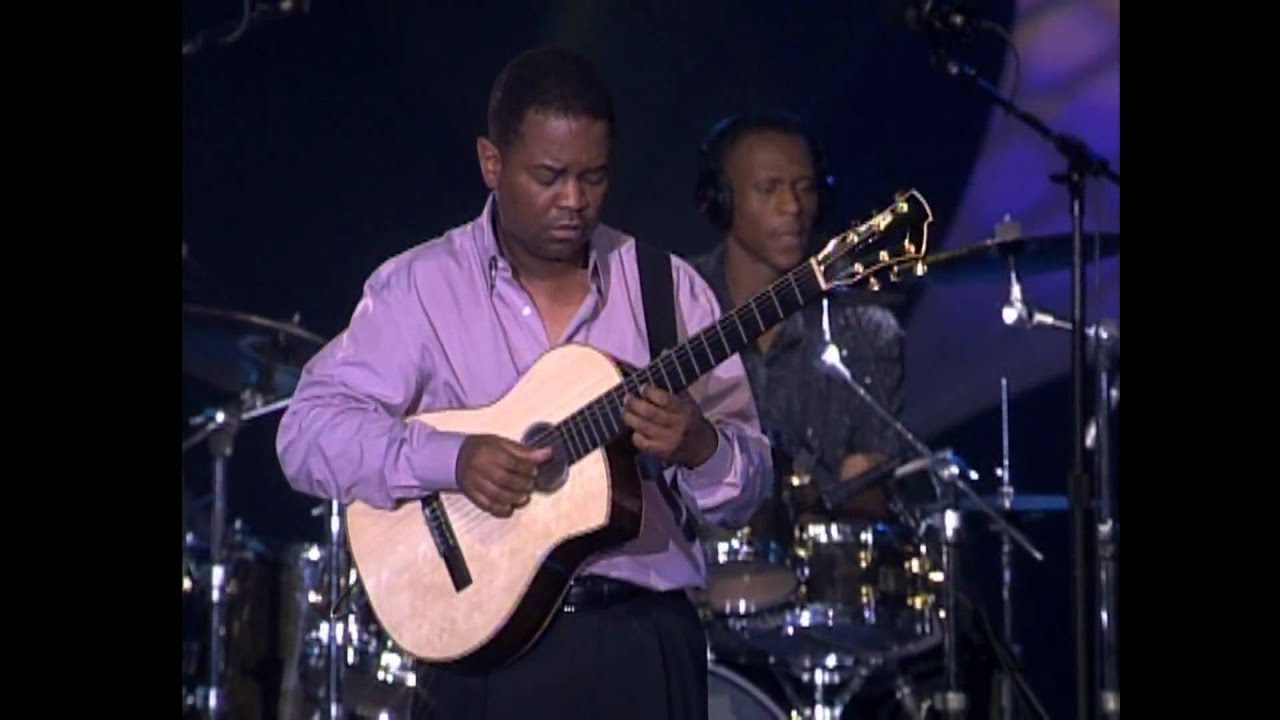

9. Russell Malone
“I think he’s from Atlanta, Georgia or somewhere near there. He and Ron Carter go around the world and play a lot of gigs together either as a duo or in other styles. It’s a great music adventure to hear them play.
Russell Malone is very different, he approaches things very methodically but it works. He’s got great technique and just sounds so unique.”
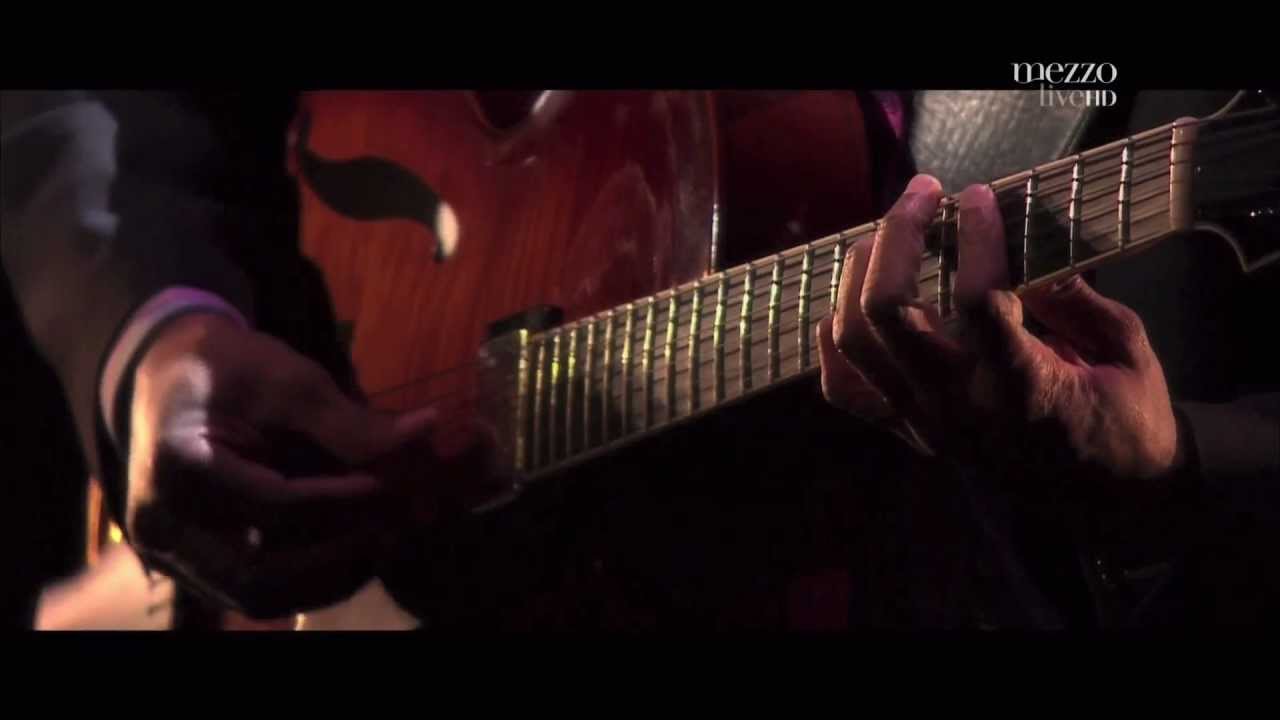

10. Mark Whitfield
“This guy is an adventurous player. He reminds me of the guitar era when Kenny Burrell came along with Jimmy Smith.
“It’s that classic tradition he’s kept alive, in addition to the new ideas he’s brought to the fold. He’s got both the technique and the tone.”
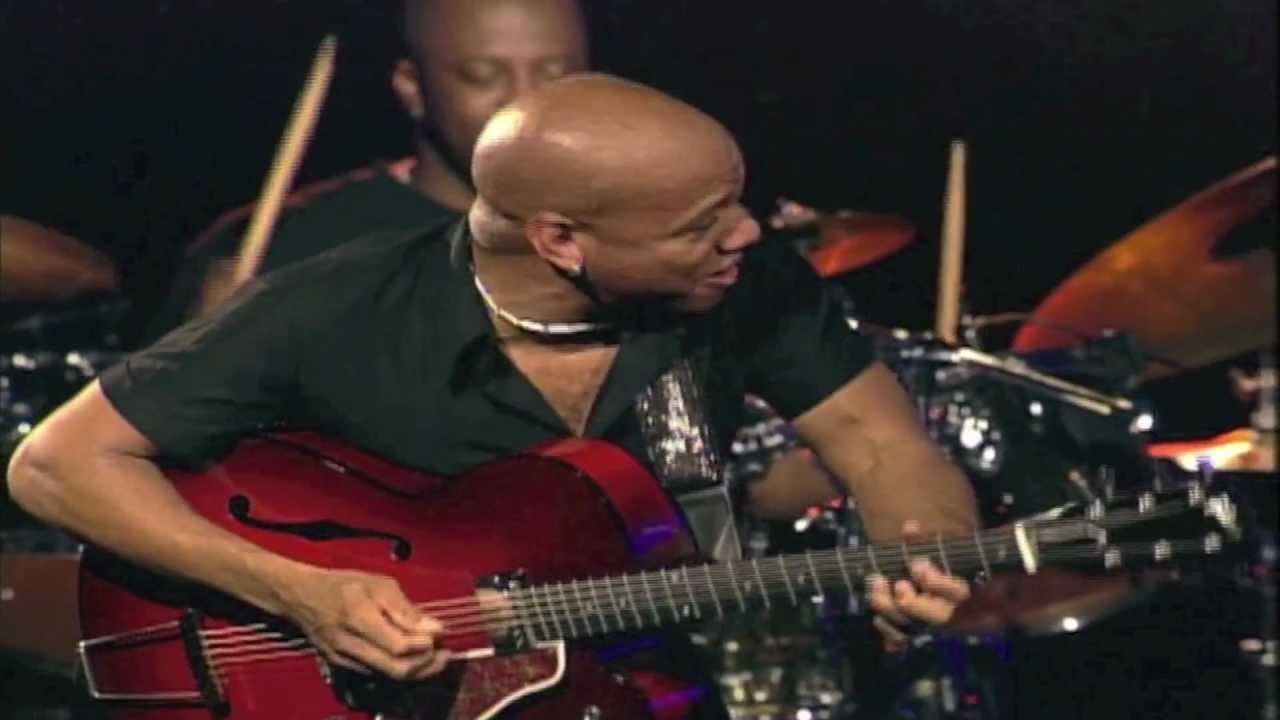

11. Grant Green
“I forgot to mention one name, man. You know the name Grant Green? Yeah, he was probably the biggest teacher in my career because he made everything sound so right.
“He approached things from a bluesy point of view, but it also had jazz and was highly improvised, yet simple to understand, get with and feel. He was similar to Charlie Christian, as well as you could hear he learned through Charlie Parker.
“I learned a lot about melody from Grant Green… he could be very convincing. Many times he played the wrong melody, but by the time he was finished, he could convince you it was the right melody.”
