
It’s the song that gave American alternative rockers Soul Asylum their one big hit and their only Grammy award.
Runaway Train was released in 1993 as the third single from the band’s sixth album Grave Dancers Union.
The ballad was written by singer/guitarist Dave Pirner, and the lyrics were mainly centred around his personal experiences of depression and dejection.
“Of all the songs I’ve written, this one sure has legs,” Pirner once admitted. “It’s hard to understand why one song out of hundreds that I’ve written still gets played on the radio so much. But to a lot of people, it’s a special song, so it’s not for me to have a say in the matter. The song belongs to everybody.”
As the story goes, Pirner felt like he was losing his hearing in between albums number five and six, which led to a nervous breakdown. One day he picked up an acoustic guitar and ended up composing new material for Grave Dancers Union, including its big hit single.
The concept of a runaway train was used as a metaphor for his worsening state of mind, haunted by dark clouds that were spinning out of control like a locomotive with no driver or sense of direction.
“Things were really hard,” he told Guitar Player in 2022. “I thought I was going deaf, so I withdrew from playing loud electric music and started writing on the acoustic guitar. It turned out to be a pivotal move for both me and the band, and things began to improve on all fronts.”
He added: “It took me a while to get the whole thing down. I kept strumming and strumming, and then I connected the lyrics to the runaway train concept. After that, I pretty much wrote it all on a napkin.”
During the pre-chorus he sings: “It seems no one can help me now, I’m in too deep, There’s no way out, This time I have really led myself astray” – words which quantify just how crestfallen and trapped he felt at the time.
The band started performing the song live while shopping for a new record deal, and the strong reactions from the crowds helped them realise they were on to something. Some of the labels, however, were confused by what they heard.
Pirner vividly remembers being told: “You’re supposed to be a punk band. Why are you making this ‘down’ music?”
Thankfully Columbia Records had a different idea and ended up signing the group to a multi-album deal.
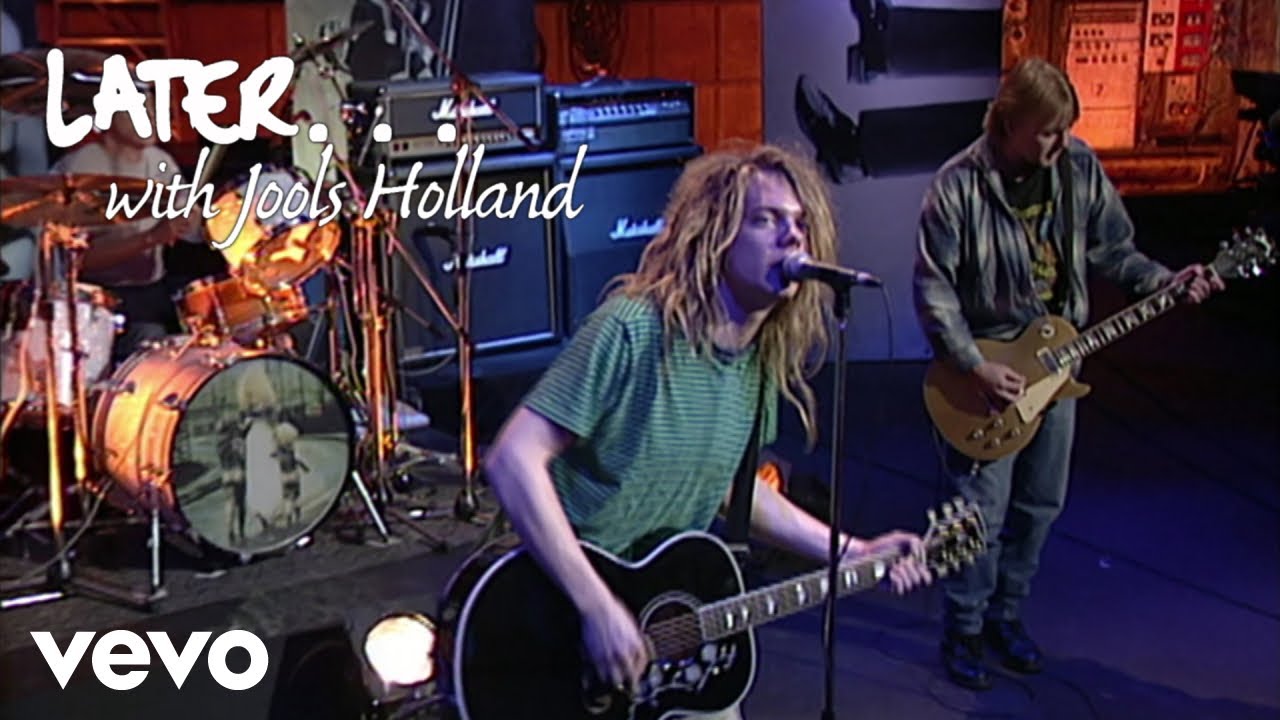
The recording sessions for Grave Dancers Union took place at The Power Station in New York City with legendary producer Michael Beinhorn behind the desk. The studio wizard had already made a name for himself working with the Red Hot Chili Peppers, Brian Eno and Herbie Hancock, and he would go on to work with more A-listers including Soundgarden, Ozzy Osbourne and Korn.
In an interview with The Guardian, Pirner said of his performance on Runaway Train: “If the vocal on it sounds world-weary, it’s because he [Beinhorn] made me sing it 100 times.”
Eventually the producer asked Soul Asylum guitarist Dan Murphy to oversee the rest of the session because, as Pirner explained, “he felt, correctly, I’d be more comfortable singing with a friend in there with me.”
While they were in the studio, drummer Grant Young was replaced by Sterling Campbell after Beinhorn decided that Young’s performances were sub-par.
The Hammond organ parts were performed by Stax Records legend Booker T. Jones from Booker T. & the M.G.’s. Pirner described Jones’s contributions as “perfect” while also remarking: “It was so cool having someone of that stature playing on my songs.”
There are only a handful of chords used in Runaway Train, with Pirner strumming the simple open position shapes and Murphy handling an arpeggiated part sitting above.
A Gibson J-200 acoustic was rented for the sessions, with Pirner admitting that “it sounded amazing” and is a guitar he still plays “to this day”.
The song is also famous for its Tony Kaye-directed music video, which begins with a statistic on the number of children lost on the streets and features pictures of missing children alongside their names during the chorus sections.
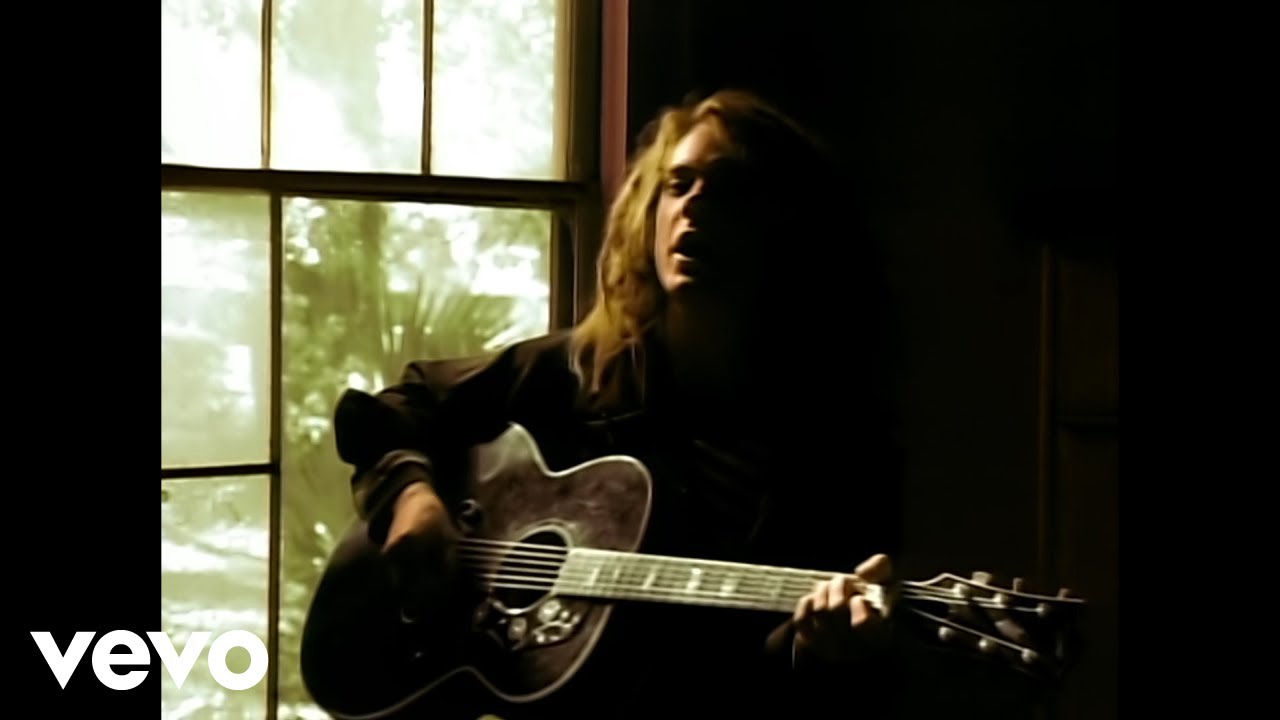
According to the director, 21 of the 36 missing children were found as a result of their inclusion in the music video, but there were also cases of extreme abuse and homicide in the less fortunate cases.
“It worked because the song was perfect for it,” Kaye later revealed. “I’d argue that it was the single most important thing that happened in the history of MTV, because it saved young people’s lives.”
The single peaked at No 5 on the Billboard Hot 100, as well as breaking into top tens all around Europe, and would later be covered by British pop rockers Busted and Brent Smith and Zach Myers of Shinedown.
Looking back in 2022, Pirner was able to reflect how the song “overshadowed everything else we did” though he was pleased it had “a resonance that is not about partying and screwing” – the hedonistic lifestyle encapsulated by a lot of hard rock bands in the late ’80s.
He mused: “It’s a sad and reflective song that reminds people that it’s not all candy out there, but that they’re not alone.”
