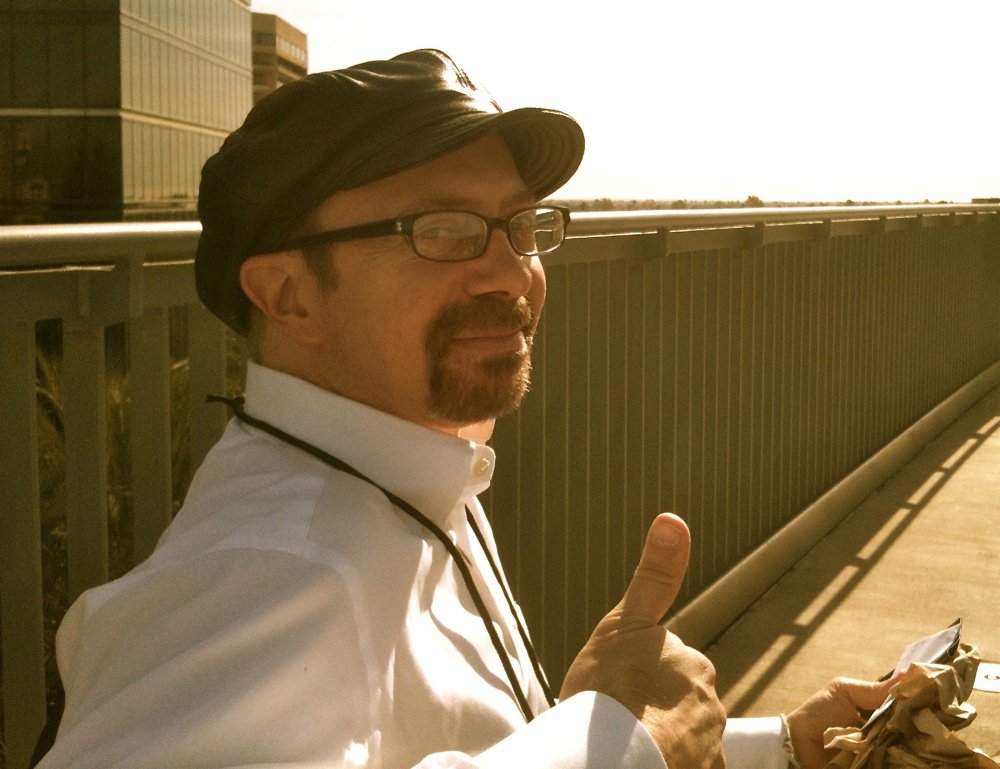
Dream Theater's Jordan Rudess: the 10 greatest prog-rock albums of all time


Dream Theater's Jordan Rudess: the 10 greatest prog-rock albums of all time
“I was in high school and had been going to Julliard, studying classical music, so I was only somewhat aware of anything going on in the rock world," says Dream Theater's keyboard master Jordan Rudess. "Classmates of mine used to show up in the school auditorium with albums by Genesis and Gentle Giant, and they tried to show me what they were listening to. That was probably how I first noticed something new was going on in music."
According to Rudess, his first true introduction to prog-rock occurred when a friend came over to his house and put on a copy of Emerson, Lake & Palmer's seminal 1970 album, Tarkus. "It electrified my thinking," he says. "Suddenly, I became super-aware of new sounds and possibilities. In fact, there were even parts on it where I went, ‘Wow! I’ve got some pieces that are kind of similar, but they sure don’t sound like that’ – because I was just playing them on piano. The record really changed my life."
Drawn to the power of keyboards and electronics, the teenaged Rudess started covering his walls with pictures of Moog synthesizers while soaking up the sounds of Yes, Gentle Giant and ELP. "I was on a mission," he says, "which led to my leaving the classical world and Julliard, much to my parents’ and teachers’ dismay."
When he was still deep into the Julliard flow, Rudess remembers that rock 'n' roll was often sneered at. "There was a lot of that attitude," he says. "You know – 'People who play that stuff don’t know what they’re doing. They’re a bunch of hoods.' Rock was for hippies and people who were into drugs. It was seen as the ‘dark side.’ But I was like, ‘Hey, it’s not such a dark side; in fact, it’s really pretty cool!’
“It’s kind of funny, though, because rock always had a rebellious spirit – that’s what rock is all about – and when I discovered progressive rock and pursued it, I had to break free and follow my own path. And that's what I did.”
On the following pages, Jordan Rudess lists (in alphabetical order by artist) what he calls the 10 greatest prog-rock records of all time. "To be a progressive musician, you have to be willing to stretch things," he says. "I think every album here has something about it that pushes the boundaries and goes beyond the ordinary. "

Emerson, Lake & Palmer - Tarkus (1970)
“Here you have a band that introduced me to the whole harmonic world, which I’d heard a little bit in classical music but never in rock. It had all these kind of cool, suspended chords, based on fourths, that Keith Emerson was so fond of. It probably stemmed from Aaron Copeland, the classical composer.
“Keith would use these chords, but he did it with such character. Instead of playing a major chord, he’d play a sus chord, and it would have a unique vibe to it. I remember hearing this album and then going over to my piano so I could find every fourth chord and sus chord possible. I wanted to be able to land on them without any trouble. I had to figure out what made that sound, and a big part of it was Keith’s harmonic ideas.
“His organ sound was so strong, too, and then you had Greg Lake’s voice along with it. The combination of everything they did was pretty great.”

Genesis - Trick Of The Tail (1976)
“It’s interesting about a lot of the records I’ve picked: many of them represent the first time I heard a certain band. That’s the case with Genesis – Trick Of The Tail was my introduction to them. First impressions are strong.
“I love the harmonic sense that Tony Banks brought to this record. One of the things he really had down at this point was keeping the same root note, but the triads moved over that note. It’s a real Genesis thing, and it really hit with this record. If you go back to earlier albums, it wasn’t so established.
“Phil Collins sounds so great, too. He’s such a marvelous singer.”

Gentle Giant - Free Hand (1975)
“Gentle Giant were an extremely important band to me. I always felt like they had something unique in the way that they used counterpoint and rhythm. Nobody else was doing that. It was special, and it had a tremendous influence on me.
“I kind of saw it as the ‘rock-Bach,’ where you have all these moving voices and interesting lines going on. I spent a lot of time studying it, not necessarily in learning how to play the exact music, but just to figure out what made it tick. I really wanted to know: ‘What is that?’
“I used to follow them around in the old days and saw them probably eight times. I liked how Derek Shulman used to work his hands as the frontman, almost like he was a conductor. Wacky, great stuff.”

King Crimson - In The Court Of The Crimson King (1969)
“One of the all-time classics, and certainly an album I have lined up to just listen to some great music. To this day, I love it. I play a lot of the slower songs on the piano.
“There’s some tremendous themes on here, and of course, The Court Of The Crimson King is truly memorable. Greg Lake’s voice is so innocent and pure – he's a remarkable vocalist. Another great thing about the album is how it goes from places that are really simple and melodic to parts that are absolutely chaotic – and it works! Then there’s this huge mellotron thing going on... I just love the scope of this record. It’s tremendous.”

Pink Floyd - The Dark Side Of The Moon (1973)
“Pink Floyd represented the whole spacey side of rock to me. Unlike other bands that were focused on melodies, with Pink Floyd it was all about the headspace. And being someone who was going through a rebellion late in life, I needed Pink Floyd.
“One big thing I liked was that their music was slow. They managed to be progressive in the depth of their musical space. To me, that was fascinating, because I came from classical music, and everything was so focused on technique. To have something that moved at its own pace and yet be so effective, that’s what captured my imagination.
“Plus all the cool sound effects, the secret voices going on, the synthesizer bit in On The Run - it was kind of like the Tangerine Dream stuff I was listening to. Floyd did these things with sequencers, and they were going so slow and trippy… I guess there’s a reason this has been so popular.
“And, of course, Dream Theater has an album of Dark Side Of The Moon. We performed it live in Holland and the UK. I have a huge Modular synthesizer that I got when we decided to do that album. I was schlepping around this massive synthesizer for a couple of tours, and then one day I made the mistake of walking in and seeing my guys trying to lift it up and put it on a stand. I said to myself, ‘OK, I can’t do this to them. It’s too much.’ The thing weighs a few hundred pounds.”

Van der Graaf Generator - Pawn Hearts (1971)
“Peter Hammill, the lead singer, was coming from the same place as a Peter Gabriel. He’s a real actor, very dramatic, operatic, a big character.
“I saw the band live at the Beacon Theater in the ‘70s, and it was one of the coolest shows that I had seen. They didn’t have a bass player; the keyboard player had bass pedals; they had a saxophonist who was playing two saxes at once, which was pretty cool; the drummer was fantastic; and then there was Peter Hammill, who was making believe he was dead on the stage!
“Pawn Hearts is really, really great prog. The whole thing just struck me in a ‘light-bulb-going-on’ over my head way. Peter’s voice is very special, too.”

Rick Wakeman - The Six Wives Of Henry VIII (1973)
“This is the first album I heard that put together the very classical world and made it rock. To me, it was as if you took a Bach fugue and put a cool beat to it – next thing you know, you have something like Six Wives.
“This album got a lot of spins from me. There’s a lot of simple elements, simple chords, but it has a super-classical approach. Another thing that struck me was the Mini Moog. The reason why I just had to have a Minimoog was because of the tone that Rick Wakeman used on his albums.
“I remember going to see him live, and he had three Minimoogs on stage with them. They all had tape markers right next to the dials to show the correct positions. There were no patches in those days.”

Steven Wilson - Grace For Drowning (2011)
“I don’t know if this is fair, but I played on the album. To be honest, I would’ve picked it anyway because I love what Steven does. He’s so creative and artistic. I remember seeing him in the early days, when Porcupine Tree were opening for Dream Theater. We’ve since become good friends.
“I was just listening to this album the other day. There’s such depth on it. Steven’s like a painter, crafting and coloring moods, mixing in progressive elements. There’s some King Crimson-y things, and he finds the intervals that create a dark energy. He’s very good at textures, but all in all, it’s just wonderful music.”

Yes - Close To The Edge (1972)
“This is a real top album for me in terms of influence. With Yes, it was about the positivity that came out of their music, not just the progressive nature of the songs and the unbelievable musicianship. It was the energy level. Jon Anderson and the rest of the band put out such a fantastic spirit - it screamed off of the vinyl.
“There’s certain things I just really love about Yes, like Steve Howe and the way he expresses melodies. In the song And You And I, there’s a beautiful lap steel melody that’s one of the most glorious moments of progressive rock, for sure.
“Great stuff from Rick Wakeman. A memorable organ solo. The whole band came into such a great space on this album.”

Stefan Zauner - Prism And Views (1978)
“I was living in Maryland, and I walked into this one record shop that had a lot of vinyl. The guy at the store had a great collection. He knew me and had an idea of what I liked, so he said, ‘Jordan, if you like Peter Gabriel and Genesis, you’re going to love this album.’ That was all I needed to hear.
“I took the record home and listened to it, and it really struck me right away. It’s become a favorite of mine – super melodic, really good keyboard work, the drumming is cool, and there's great guitar playing. But something about the songs really stayed with me. I turn everybody on to this record.
“I like the cover. You can kind of see somebody running through the woods towards a synthesizer. It fits the music, which is very progressive, emotional and song based. It all works with Stefan’s nice light voice. Great stuff.”