Recording is a big subject; even though our first 25 recording tips explained many aspects of the process, there´s still more to cover. So, MusicRadar offers another 26 unmissable tips that´ll help you to get better takes today.
1. Drum recording is all about starting with the right basic setup. Begin with a dynamic mic inside the kick and slightly off-centre, and two condensers above the kit, about 2-3 metres off the floor. Make sure nothing´s rattling, try a pillow inside the kick, and get your headphones on for fine adjustments.
2. Think carefully about your recording environment. Acoustic instruments generally sound best when they´re recorded in a space with a little natural ambience, whereas vocals are generally best recorded in a sound-absorbing environment ready for your own reverb to be added later.

3. Despite what you might see on Jools Holland, saxophones and other brass and wind instruments sound horrible when you jam a mic down their bell. In the studio you want to place the mic 1-3 metres away and slightly to the side to avoid gusts of air audibly hitting it.
4. Just because you have a bunch of mics doesn´t mean you have to use them all. For example, don´t rush into using a different one for every drum in your kit until you´ve mastered the art of placement. A really good engineer will get a better result with one overhead and a kick drum mic then a novice will with eight of them.
5. Microphone choice is a subjective matter (there are different schools of thought in the US and UK, for example), but generally speaking you want a condenser for softer instruments and voices, while a dynamic works best for heavy sounding amps and drums, or in environments where the mic is likely to get bashed about.
6. The worst enemy of recording is resonance, so whether it´s your amps, your monitoring or even your piano, listen out for that tell-tale hum and rattle, and if you hear it, try moving the offending item around the room until it disappears. Once it´s in the recording, there´s no getting rid of it!
7. You can sometimes get a smoother and warmer sound from a guitar amp by placing the microphone behind it. You can raise the amp off the ground for a different effect, or place the mic inside the cabinet.
8. For the best sound quality you should record different instruments separately, as it´s hard enough to get just one recorded cleanly when you´re starting out. That said, there is, of course, something special about a band playing together, so if you have enough space and mics, give it a go. And make sure that you use padded sound screens to help get separation.
“A dynamic works best for heavy sounding amps and drums, or in environments where the mic is likely to get bashed about.”
9. Latency can be hugely off-putting for any player when recording. To counter it, disable any latency-inducing plug-ins, or simply use an audio interface that features direct monitoring. This mixes the signal from your computer with the direct signal from the input for monitoring purposes, eliminating latency.
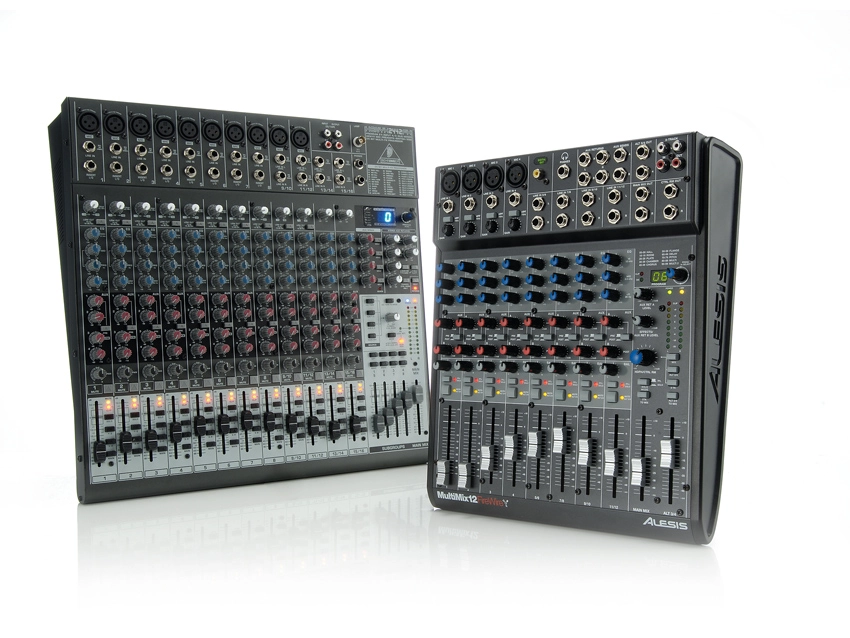
10. If you´re recording a band, get a decent hardware mixer and use it to supply monitoring for the musicians and send their individual signals to a multi-input audio interface connected to your computer for actual mixing later.
11. Make sure that all of your instruments are well maintained before you even think about recording them. You don´t want to inadvertently track a squeaky kick drum pedal or out-of-tune G-string. Again, once it´s recorded, it´s recorded and there´s no going back…
12. Unless you absolutely have to record a grand piano, don´t. It´s really hard to do. Still here? OK then, try using two quality condenser mics placed about two metres off the ground, about four metres back and angled in line with the piano´s curve. Like we said, though, just get a decent ROMpler instead - it´ll probably sound much better.
13. For a classic bright, sharp pop-style piano recording, place the mic close to the strings. Nearer than about 25 centimetres will result in some of the strings being recorded louder than others, though, affecting the overall tone and dynamics.
14. If you have a good acoustic space to work in, don´t let it go to waste. Place a condenser mic in the corner or at the other end of the room to where you´re recording and capture all that lovely ambience, ready to mix back in with the original signal later.
15. Think about your genre when recording. For rock you want a booming, rich acoustic space with lots of wood panelling. For funk and jazz you want low ceilings and carpeted floors to create a drier, more intimate feeling. Try and keep panels and carpeting handy so that you can use them to alter your space.
16. Make sure that your singer warms up. If they don´t, then even if they do a perfect take of verse one on the first pass, you won´t be able to use it later as all the following ones will sound completely different.
17. Record everything! But do be judicious and sensible when you come to compile all those takes. Don´t try to use everything - only keep the best bits.
18. Watch your levels when recording. In the old days you often had to compress incoming signals to ensure that they were strong enough without clipping, but signal paths these days are usually very quiet, so you can often just record at a lower input level and then raise it afterwards.
19. When recording vocals, keep three pens handy - red, amber and green. With each pass, draw a line under the part being sung: red for ‘unusable´, amber for ‘possibly usable´ and green for ‘definitely usable´. Don´t stop recording until you have at least three green lines under every part.
“Signal paths these days are usually very quiet, so you can often just record at a lower input level and then raise it afterwards.”
20. Get yourself a pop-shield. It will stop people spitting all over your mic, and also prevent those popping plosive sounds, such as you´d get from saying ‘popping plosives´ into a microphone without a pop-shield.
21. Always pay close attention to microphone placement. With drums and other instruments this might mean getting down on your hands and knees next to the kit or amplifier with your headphones on; with vocals it might mean strapping your vocalist to a pillar and placing the mic 20-60cm away. Vocals still too boomy? Then simply move the mic even further away.
22. Whenever you´re recording delicate sounding instruments, be sure you´re using a very clean and high-quality signal path, as such things are far more prone to hiss when EQ´d and compressed.
23. If you´re recording anything in one long take, it makes sense to do a basic pass first, then to go back and add flourishes such as long solos or that mid-set scratch attack. Otherwise, you risk spoiling a good take with a simple mistake in a tricky section.
24. You might well encounter a lot of hiss when recording a guitar amplifier, so either use some high frequency roll-off or a noise gate to counter it.
25. It can be very easy to get carried away in the middle of a live set, so make sure you keep an eye on your inputs. Intentional distortion on guitars is great, but overloaded signals on a vocal or drum mic will just ruin the fidelity of your recording.
26. Even if you don´t play any instruments, we´re willing to bet that you know people who do. The best way to learn is by trying, and most musicians will be happy for you to learn about engineering while you record them for free.
