
The Yardbirds are not just one of those iconic bands from the 1960s that are still around, they were the birthground, the launchpad for a truly awesome hat-trick of musical legends.
It’s 30 years since they were inducted into the Rock & Roll Hall of Fame; 35 years since Clapton denied he was the greatest guitarist in the world on The South Bank Show. What follows is a fond tribute to a group who were both a cradle to great soloists and an inventive, eclectic and original band almost as great as its component parts...
Formed in the summer of 1963 in the South West London suburbs by Keith Relf and Paul Samwell-Smith, who had together played in the Metropolitan Blues Quartet, they were joined by Anthony ‘Top’ Topham, Chris Dreja and Jim McCarty and called themselves Blue-Sounds, with their first gig at Eel Pie Island.

In September they switched to The Yardbirds, a mix of tribute to Charlie ‘Yardbird’ Parker the jazz saxophonist and the image of ‘hobos around the rail yards waiting to hitch a train ride’.
They built an R&B reputation on the club circuit, using material from Chicago Blues artists such as Muddy Waters, Bo Diddley, Elmore James, Sonny Boy Williamson and Howlin’ Wolf. It was when Topham left in October 1963 that Eric Clapton joined as lead guitarist and impressario Giorgio Gomelsky became their manager and signed them to EMI, that they really started to take off.
Crossing into the commercial pop-rock market during the 1960s, yet keeping a repertoire of traditional raw American blues, they were a great influence on other British bands of that era and beyond.
1. Genre-bending

Rhino’s Greatest Hits Vol 1 (1964-66) featured liner notes by US music freelancer Parke Puterbaugh who positioned The Yardbirds alongside groups like The Animals and The Rolling Stones, "creating hard rock out of standard 12-bar blues, doubling the tempos and whacking the amps up to 10." He could have added The Kinks and The Who for good measure.
In Puterbaugh’s view, The Yardbirds "expanded the range of electric guitar with feedback, sustain and fuzztone," making their own the habit of a free-for-all jam before the final verse, not as soloists but in a tandem, "until you reach an epiphany 10, 20, 30 minutes later, a shuddering climax of decibels and pure energy."
He styled them as the bridge between the tributary white R&B of early '60s London and "the pastures of fuzz-toned psychedelia and power-chorded heavy metal." They also experimented with backwards echo.

In his definitive historical account of the group, Yardbirds: The Ultimate Rave-Up, Greg Russo (updated 2011) claimed they reached "uncharted territories in rock" and that their rock blueprint affected such later groups as Aerosmith and The Allman Brothers.
During the brief period when Jeff Beck and Jimmy Page overlapped in their Yardbirds’ membership, they played Stroll On in the classic movie Blow Up (1966), with an equipment-smashing sequence that was a take off of The Who’s modus operandi at that time.
2. The singles
From 1964’s I Wish You Would and Good Morning Little Schoolgirl, it was For Your Love / Got To Hurry which reached number three in 1965 that put the group firmly in the pop consciousness.
Heart Full of Soul (1965), took the contemporary pop beat into the top ten, but coupling it with Steeled Blues reminded fans where their roots lay. The fashion for EPs was still strong, so that year saw the release of My Girl Sloopy.
Another occasional gimmick was for bands to put out double-A side singles, often cynically letting DJs decide which one to put face up on the turntables. The Beatles did it with We Can Work It Out and Day Tripper in the same year.
Evil Hearted You was reportedly penned by Graham Gouldman after a particularly troubled stint in a dentist’s chair and is still best known for its use of Spanish (or Flamenco) scales, quite rare in the mid-1960s. This was an altered Phrygian scale featuring an usual key signature and augmented second interval.
It was coupled with Still I’m Sad, whichbroke new and different ground as Paul Samwell-Smith and Jim McCarty included Gregorian chant. In the US this track was coupled with I’m A Man.
In October that year they released Happenings Ten Years Time Ago, their first single featuring Jimmy Page and Jeff Beck. John Paul Jones played session bass on the recording.
By 1966 the outfit created Shapes of Things and You’re a Better Man Than I, which reached number three in the UK charts. Shapes issometimes regarded as one of the first truly psychedelic guitar-solo songs (Jeff Beck on his Fender Esquire; Jimmy Page on the 1968 live version) and was written by Samwell-Smith, Relf and McCarty.
Over Under Sideways Down (1966) was a thinly disguised Bill Haley and The Comets’ Rock Around the Clock (with Beck on lead and bass), and the B side was Jeff’s Boogie, which owed more than a little to Chuck Berry’s Guitar Boogie.
In October that year they released Happenings Ten Years Time Ago, their first single featuring Jimmy Page and Jeff Beck. John Paul Jones played session bass on the recording.
There were other releases, but none did brilliantly well. Ha Ha Said the Clown by Manfred Mann did better chartwise, and it’s interesting that The Yardbirds chose to cover the same tune as the Manfreds, as there are many similarities of pop/rock/blues/R&B crossover in both bands.
1967’s Ten Little Indians, the Harry Nilsson classic about The Ten Commandments reached only 96 on the Billboard 100, but is most interesting as being the track on which Jimmy Page claimed to have ‘invented the reverse echo audio effect’.
3. The albums
The Yardbirds issued some albums with different titles in the UK and the USA. Like most other groups the albums were mixtures of singles (hit or not) and other tracks. Then, as technology developed, some were monoaural, others stereo. Many of the more recent compilations have been slated by purists as commercial exploitation rather than serious musical themes; for these followers, albums only up to 1968 should be considered Yardbird works.
Some interesting, if critical, commentary is found in Wilson & Alroy’s Record Reviews, "we listen to the lousy records so you wont have to." They described The Yardbirds as one of the most legendary ‘British Invasion’ bands, shorter lived and "more thoughtlessly marketed" than their competitors.
Their commercial success lasted only a little over a year. "Clapton and Page had little to do with that and Keith Relf had little range and none developed as songwriters until it was too late." W&A said that most original Yardbirds LPs were hard to find "and weren’t great anyway." They also stated that many compilation albums were "thrown together" from early live recordings and a demo tape and some "forgettable blues workouts."
Put together by producer Giogio Gomelsky, 1965’s For Your Love was the first for the US market, timed for their first tour there. It featured three songs from Jeff Beck’s first recording session with them, My Girl Sloopy (which later became Hang On Sloopy), I Ain’t Done Wrong and I’m Not Talking.
Having A Rave Up (1965) was the US follow up, and featured four by Clapton (who had left eight months previously). Rolling Stone magazine called the LP, "the bridge between beat groups and psychedelia."
Yardbirds (1966) became known as Roger The Engineer (in France it was Over Under Sideways Down) from the LP cover cartoon by Chris Dreja, and was called a precursor to heavy metal through Jeff Beck’s guitar distortion experimentations and was their only offering with all original material.
Little Games (1967) would turn out to be the final album, and it was produced by Mickie Most, for many fans, an arrangement too far. Jimmy Page on Tinker Tailor Soldier Sailor, Glimpses and White Summer were the main attractions.
Five Live Yardbirds (1964) was described by Ken Kessler of Hi-Fi News And Record Review as "the short jump from live gigs to vinyl," as it "captures the excitement of early 1960s British blues clubs in a way no studio recording could." Two years later they backed bluesman Sonny Boy Williamson on an album.
4. The gigs

There are few surviving records of the gigs that The Yardbirds did together. Fans can still pick up some memorabilia, and there are preserved posters and the like in various archives, but there is no great market for souvenirs from the '60s of this band.
What of the '60s gigs?, especially the first and several subsequent ones at Eel Pie Island, famous as a jazz and blues venue?
We get a tantalising taste but no details from the book The Yardbirds by Alan Clayson: "From roughly 1964 to 1966, The Yardbirds released a series of spellbinding singles and EPs that combined blues, straight-ahead rock 'n' roll, Eastern influences, Gregorian chants, and spaghetti western guitar rhythms into an explosive, kinetic sound.
"During this time they toured the UK incessantly, and had a big-enough impact in the US to justify tours long after their hitmaking days were over. Their popularity as a live act helped establish an audience for the subsequent Led Zeppelin, and inspired much of the garage band movement."
In a review of The Best of the Yardbirds(2003) by Hal Leonard, Danish critic Mogens H Soerensen said: "Sadly I only saw The Yardbirds once here in Copenhagen, and guess what a downer: they came without the single-guitarist - Jeff Beck was ill! (meningitis, I think)."
There is a book called On The Trail Of The Yardbirds in Canada During The 1960s, by Piers Hemmingsen (1997, updated 2011), which details the handful of Canadian gigs they did. He reckoned it was their songs on Canadian radio that made them so popular, but "looking back now, it just seems that The Yardbirds were totally caught up in touring the USA and that left little time for any touring of Canada. However, Capitol of Canada issued a total of five albums between September 1965 and October 1967, and all but the first of these were issued in both mono and stereo formats."
The famed Indiana Beach Monticello ballroom that saw rock luminaries like The Turtles, Janis Joplin, The Beach Boys, The Four Seasons, a young Sonny & Cher, Big Brother & The Holding Company, Jefferson Airplane, The Who, Alice Cooper, Simon & Garfunkel and The Everly Brothers, also hosted The Yardbirds (12 Aug 1966).
German photographer Rick Knapp was there, and while so many artifacts of the '60s have vanished, his photo was taken from his pole position at front of stage, the musicians towering over him. His snaps appeared in Classic Rock magazine and some are on the Led Zeppelin site, but according to Tim Brouk, who writes about Indiana Beach: "Page looks a bit out of place playing a four-string bass instead of the six-string guitar, which he later achieved fame with in Led Zeppelin."
5. Eric Clapton
Born in Surrey, England on 30 March 1945, he was raised in a musical family by his grandparents believing that his mother was his sister. Ray Coleman, Clapton’s official biographer, wrote that Eric’s father was a "gifted musician."
The boy was above-average as a child, with aptitude for art. It was when his mother visited him, aged 9, with his half brother, that he learned about his parentage and was profoundly affected. He switched off, eventually failed his 11-plus and went to a secondary modern school.
He wanted a guitar for his 13th birthday as rock 'n' roll was all around by the late 1950s. He found his Hoyer with steel strings difficult to play, but by the time he was 16 he was expelled from Kingston College Of Art for spending too much time playing guitar and listening to the blues.
This fascination led to a real feel for the blues within his psyche (different; an outsider). He bought a £100 electric double cutaway Kay (described as a Gibson ES-335 clone), and joined The Roosters in 1963, coupled with supporting himself as a building labourer. He built a reputation as a guitarist on the R&B pub circuit, which led to Keith Relf and Paul Samwell-Smith inviting him to join The Yardbirds in October 1963.
He played for eighteen months with them, and became known as ‘Slowhand’. As the band moved towards more commercial pop, Clapton wanted to keep true to the blues and quit, to join John Mayall’s Bluesbreakers, where he acquired a second nickname, ‘God’.
The rest is history. Eric Clapton has won 17 Grammy Awards and was awarded the CBE for services to music in 2004. Learn how to play like Eric Clapton and sound like Eric Clapton courtesy of our video lessons.
6. Jimmy Page

According to the unofficial fansite for Page, the basic facts are that he was born in Middlesex, England in January 1944. He first ‘picked up a guitar’ when he was 12, had some lessons but was mainly self taught. An early possession was a second-hand 1959 Futurama Grazioso.
Early influences included Scotty Moore and James Burton on one hand, and Bert Jansch and John Renbourn’s acoustic folk playing on the other, with Elmore James and BB King blues for good measure.
Page left school at 14 and joined a band called The Crusaders, followed by playing with Neil Christian, when he fell ill with glandular fever and stopped touring. He then decided to put music aside for a time, and enrolled at Sutton Art College. However, he would often jam with guys from Alexis Korner, with Eric Clapton and Jeff Beck.
This lead to a career as a session musician where, among many, he played on Jet Harris and Tony Meehan’s Diamonds, The Who, The Kinks, Nashville Teens’ Tobacco Road, Rolling Stones’ Heart of Stone, Mariane Faithfull’s As Tears Go Byand Van Morrison (with Them) on Baby Please Don’t Go and Here Comes the Night.
He was appointed house producer and A&R man for the new Immediate Records and so played on and/or produced tracks by John Mayall, Nico, Chris Farlowe and Eric Clapton. He worked with Joe Cocker, Al Stewart and Jackie DeShannon (and also enjoyed a romantic connection).
It was late 1964, according to the unofficial site, that he was invited to replace Clapton in The Yardbirds. He declined from loyalty to Clapton and because session work was lucrative. He suggested Jeff Beck, instead.
During 1966 he had the idea of a new group, after Beck’s Bolero was recorded, featuring The Who’s drummer Keith Moon and John Entwistle, bassist John Paul Jones, keyboardist Nicky Hopkins and Jeff Beck, but it came to nothing.
When Paul Samwell-Smith left The Yardbirds, Page joined to play bass before Chris Dreja switched to four-string, so Page and Beck teamed up on lead guitars. The view about The Yardbirds at that point, expressed by fans but not ‘official’, was "the musical potential of the line-up was scuttled by interpersonal conflicts caused by constant touring and a lack of commercial success’, although they released one single, Happenings Ten Years Time Ago."
While Page and Beck played together in the band, the Page, Beck and Clapton trio never played in the original group simultaneously, but did appear on stage together at the Arms Charity Concerts in 1983. Page wished to continue with a group when Keith Relf and Jim McCarty left in 1968, so took on drummer John Bonham and vocalist Robert Plant. John Paul Jones also joined.
They appeared as The New Yardbirds, but Keith Moon said that would go down like "a lead zeppelin," which became Led Zeppelin. With experience as producer, composer and guitarist, Jimmy Page shaped the new band as ‘a prototype for future rock bands’ through the 1970s.
7. Jeff Beck
Like his fellow guitar legends, Clapton and Page, Beck is still working, touring, recording and is remembered as a great. In his book about John Peel, Michael Heatley wrote (2004) that former grave-digger Rod Stewart only got into the Faces as singer because "he had achieved a degree of fame with the Jeff Beck Group in the 1960s."
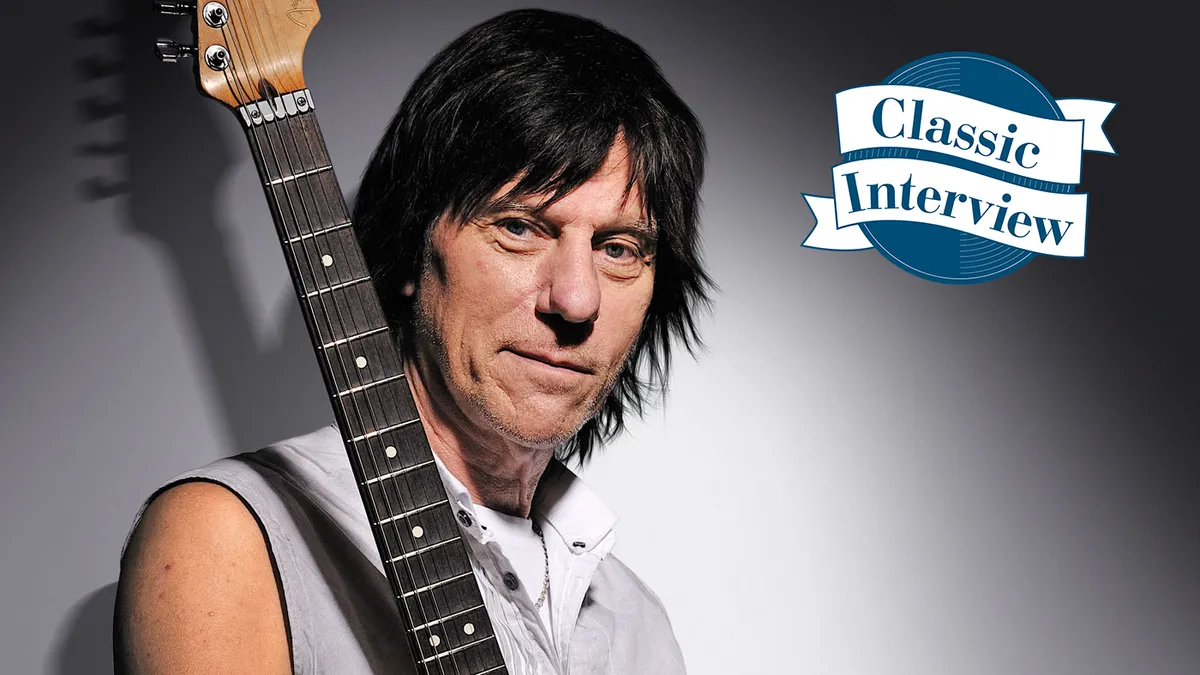
Beck has become what is styled ‘a guitarist’s guitarist’, as he has the respect of his peers as a virtuoso. His work, mainly instrumental, has spanned numerous genres, while he has played with Kate Bush, Mick Jagger, Roger Waters, Donovan, Stevie Wonder, Brian May and ZZ Top.
Born in June 1944 in Wallington in the South London Borough of Sutton, he sang in a church choir as a child, was taken with the sound of electric guitar on the radio and learned to play on a borrowed guitar and tried to make one himself. The blues was a strong early influence.
He went from school to Wimbledon College Of Art (art was certainly a common linking theme among the guitar trio), painted and decorated and spray-painted cars. His sister Annetta introduced him to Jimmy Page when they were teenagers.
His first band was The Rumbles where he showed a talent for guitar mimicry, then worked as a session man, before replacing Clapton in The Yardbirds in March 1965. He had twenty months with them, during which time most of their hit singles were cut.
Beck’s star and reputation remained high. Pink Floyd drummer Nick Mason wrote in his autobiography, A Personal History of Pink Floyd (2004), that when Syd Barrett left Floyd in 1967, they’d wanted to recruit Jeff Beck but "none of us had the nerve to ask him!" That was the status he had, even then.
8. The others
There was Keith Relf, one of the founders and frontman of the band, and yet another art student. While some have criticised his vocal prowess, others have praised it, along with his songwriting and harmonica skills. The fact is that he was instrumental in getting the group off the ground (even naming it, according to Jim McCarty) and leading the cross over into the early psychedelic-rock/blues influenced music which allowed the group to flourish financially.
Like others, he went on after The Yardbirds to form groups. With Jim McCarty, he set up Together, then Renaissance which also included his sister, Jane. Then he set up Armageddon, hard rock outfit. His death came from electrocution at his home from an improperly grounded guitar. He was just 33. His entry in the Rock And Roll Hall Of Fame came in 1992, posthumously.
Jim McCarty was recognised as an innovative drummer, if without the exaggerations and excesses of Keith Moon. Nonetheless his influence was significant. He experimented with a train beat in Train Kept A-Rollin’, a martial beat on Shapes of Things and a proto speed metal beat on I’m A Man.
Of all of the band, he has written the most coherent and full account of their early days: "We got our break when we played at The Beatles’ Christmas Show in 1964 in Hammersmith Odeon in London. A publisher was in the audience and thought that a good song for us would be For Your Love, newly written by Graham Gouldman. We went into the studio and did a version using harpsichord, bongos and stand-up bass, Paul having had the idea to do this arrangement."
Paul Samwell-Smith is described byAll Music as: "something of the odd man out in the lineup, with relatively short, neatly combed hair in most photographs and the most conventional good looks for the time (which, in many ways, made him the most unconventional looking member of the band). While the others had the mod-ish, long straight-haired look of most British rock 'n' roll musicians of the time, he resembled more of a pre-Beatles-era musician, or even a blues or jazz enthusiast of the previous decade."
Feted for being as ‘much an architect of their music as anyone’, he created a distinctive bass that was almost the lead on Smokestack Lightning and then the foundation of You’re A Better Man Than I, a foil for Beck’s break. It was once they started writing their own material that Samwell-Smith came into his own and took on more production. Still I’m Sadbroke every rule going, becoming a three minute masterclass in '60s experimentation and eclecticism.
Chris Dreja always had an interest in photography (one of his pictures of Led Zeppelin was the back cover of their debut album), and it was to that field he moved after music, although he still plays in the contemporary Yardbirds line-up.
He switched from rhythm to bass guitar and took on song writing duties by the time the Roger The Engineer album was in production. He was rated enough by Jimmy Page to be offered a place in his new band (to become Led Zeppelin), but he turned that one down.
Anthony ‘Top’ Topham was The Yardbirds’ first lead (blues) guitarist, and his departure before the band really took off enabled Clapton to join. School friends with Chris Dreja, the pair frequented the Railway Hotel in Norbiton in south London to enjoy trad jazz. There they met Samwell-Smith, Relf and McCarty, and decided to form a new group.
Topham was only 15, younger than the others, and both he and his parents were anxious about his art (and other studies), so he decided not to turn professional as a musician. In the years between, he has pursued a number of different musical styles.
Most famous for leading successful '70s group 10cc, Graham Gouldman was first a songwriter. Caught up and taken to the States to write ‘bubblegum pop’, he progressed from that ‘creative lowpoint’ to work with other artists in creating new and successful songs.
It was in 1965 while he worked in a men’s clothing store that he wrote a string of hits, which included For Your Love, Heart Full of Soul and Evil Hearted You for The Yardbirds.
In 1967 he wrote for producer Mickie Most, who achieved success with The Animals, Herman’s Hermits, Donovan, Suzi Quattro and the Jeff Beck Group. Most produced The Yardbirds’ album Little Games, and because it was not a commercial success swore he’d steer clear of rock groups from then on.
There was a deal of artistic difference, as he insisted every song should be three minutes and albums were an ‘afterthought from the singles’. This flew in the face of the rising success of concept albums in their own rights (such as The Beatles’ Sgt Pepper’s Lonely Hearts Club Band; Pink Floyd’s The Wall; The Beach Boys'Pet Sounds and Jethro Tull’s Thick As A Brick).
Some later observers have likened the Mickie Most-Yardbirds collaboration to Phil Spector producing Leonard Cohen’s 1977 Death Of A Ladies’ Man – highly unlikely and improbable!
9. Rock And Roll Hall Of Fame
To be inducted into this august body is a mark of the ultimate respect in which peers hold a musician. The Rock And Roll Hall Of Fame and Museum explains: "It exists to collect, preserve and interpret the impact rock has made on our world." That members of The Yardbirds have received this accolade, speaks for itself about their contributions.
Eric Clapton’s entry reads: "With his induction into the Rock And Roll Hall Of Fame as a solo artist on 6 March 2000, he became the first musician to have been inducted three times. He was first honoured as a member of The Yardbirds in 1992, then with Cream in 1993, and finally as a solo artist in 2000.
"While his stints with the groups were relatively brief, he has brought his singing and songwriting to the fore while maintaining his stature as rock’s preeminent guitarist. Demonstrating a remarkable resilience, Clapton has managed to establish himself as a vital, hit-making presence in every decade."
During Jimmy Page and Led Zeppelin’s 1995 induction, Aerosmith guitarist Joe Perry said, "It was pure chemistry, kind of like Howlin’ Wolf meets the Loch Ness Monster." Calling Page "the riff-master," Perry went on to say he himself had learned a lot from Jimmy Page.
In 2009 it was the turn of Jeff Beck to be inducted. Tributes included: "Beck is a whiz at wresting precision-tooled melodies and explosive atmospherics from the guitar, combining awesome fretboard technique with mastery of effects and pedals."
Writer Gene Santoro was quoted as hailing "his strong vibrato, his fierce attack and fat tone, his acute microtonal sense of pitch when he bends or slides into a note, his sophisticated sense of melodic and rhythmic playing, his ability to wring painfully true notes from up by the guitar’s pickups, his continuing use of the electric guitar to generate textures as well as notes."
10. They left the stage too soon
As it is, The Yardbirds are an inextricable part of the story of Eric Clapton, Jimmy Page and Jeff Beck, three British guitarists unique in their generation.
For many observers, The Yardbirds were midwives at the birth of popular garage rock and hard rock, while progressive rock and acid rock all owe their existence to the Yardbirds. They pioneered the absolute dominance of the guitar in all its raw possibilities and experimentation, like feedback, distortion and fuzztone.
People often say a movement is ‘ahead of its time’, but The Yardbirds were that time. Their impact still echoes through guitar styles. The legend lives on both because of their three megastar guitarists and because of all their other contributions to rock history.